No recent searches!

    Escape Himalaya
    • Certificate ofExcellence 2025
    • Whatsapp, Viber+977 9851006121
      • Everest Region
        • Everest Base Camp Trek - 14 Days
        • Everest Base Camp - Chola Pass - Gokyo Trek - 17 Days
        • Everest Base Camp Short Trek - 13 Days
        • Everest Base Camp Luxury Trek - 15 Days
        • Everest Base Camp Heli Shuttle Trek - 12 Days
        • Luxury Everest View Trek - 9 Days
        • Everest Panorama Trek - 9 Days
        • Everest Three High Passes Trek - 20 Days
        • Everest Base Camp Trek Heli Return to Kathmandu-11 Days - 11 Days
        • Everest Base Camp Trek for Seniors - 20 Days
        • Everest View Trek - 7 Days
      • Annapurna Region
        • Annapurna Base Camp Trek - 14 Days
        • Annapurna Circuit Trek - 14 Days
        • Mardi Himal Trek - 8 Days
        • Jomsom Muktinath Trek with Poon Hill - 9 Days
        • Short Annapurna Base Camp Trek - 6 Days Hike - 9 Days
        • Annapurna Circuit Tilicho Lake Trek - 17 Days
        • Annapurna Family Trek - 8 Days
        • Annapurna Base Camp Trek Heli Return to Pokhara - 10 Days
        • Annapurna Hot Spring Trek - 8 Days
        • Annapurna Trek with Chitwan Tour - 9 Days
        • Shortest Annapurna Base Camp Trek - 9 Days
      • Langtang Region
        • Langtang Valley Trek - 10 Days
        • Bhairav Kunda Trek - 14 Days
        • Helambu Trek - 8 Days
        • Langtang Helicopter Tour - 3 hrs
        • Langtang Gosainkunda Helambu Trek - 16 Days
        • Tamang Heritage Trail - 10 Days
        • Langtang Gosainkunda Trek - 13 days
      • Manaslu Region
        • Manaslu Circuit Trek - 14 Days
        • Manaslu Tsum Valley Trek Itinerary - 20 Days - 20 Days
        • Tsum Valley Trek - 13 days
      • Mustang Region
        • Upper Mustang Trek - 16 Days
        • Mustang Tiji Festival Trek - 18 Days
        • Lower Mustang Trek - 14 Days
        • Jomsom Muktinath Trek with Poon Hill - 9 Days
        • Upper Mustang Jeep Tour - 11 days
      • Dolpo Region
        • Upper Dolpo Trek - 25 Days
        • Lower Dolpo Trek - 18 Days
      • Summer Treks
        • Lower Dolpo Trek - 18 Days
        • Upper Mustang Trek - 16 Days
        • Lower Mustang Trek - 14 Days
        • Rara Lake Trek - 16 Days
        • Upper Dolpo Trek - 25 Days
        • Upper Mustang Jeep Tour - 11 days
      • Winter Treks Package
        • Short Annapurna Base Camp Trek - 6 Days Hike - 9 Days
        • Mardi Himal Trek - 8 Days
        • Australian Camp Short Trek in Pokhara - 5 Days
        • Annapurna Family Trek - 8 Days
        • Nepal Adventure Tour - 12 Days
        • Everest View Trek - 7 Days
        • Helambu Trek - 8 Days
      • Less Touristic Trails
        • Rara Lake Trek - 16 Days
        • Upper Dolpo Trek - 25 Days
        • Makalu Base Camp Trek - 21 days
        • Langtang Gosainkunda Helambu Trek - 16 Days
        • Pikey Peak Trek - 12 Days
        • Lower Dolpo Trek - 18 Days
        • Bhairav Kunda Trek - 14 Days
        • Kanchenjunga Trek - 22 days
        • Helambu Trek - 8 Days
      • Bhaktapur Patan Tour - 6 Hours
      • Kathmandu Day Tour - 6 Hours
      • Chitwan Jungle Safari Tour - 3 Days
      • Kathmandu Nagarkot Sightseeing Tour - 4 Days
      • Langtang Helicopter Tour - 3 hrs
      • Explore Nepal Tour - 10 Days
      • Bardia National Park Tour - 4 Days
      • Nepal Adventure Tour - 12 Days
      • Nepal Discover Tours - 6 Days
      • Everest Helicopter Tour - 3 Hours
      • Tour of Kathmandu's 7 UNESCO World Heritage Sites  - 1 days
      • Pisang Peak Climbing - 19 days
      • Lobuche Peak Climbing - 18 Days
      • Island Peak Climbing - 20 days
      • Tharpu Chuli Peak Climbing - 0 days
      • Naya Kanga Peak Climbing - 15 days
      • Mera Peak Climbing - 19 Days
      • Mera and Island Peak Climbing via Amphu Laptsa Pass - 23 days
      • Nepal Tibet Bhutan Tours - 13 days
      • Bhutan Experience Tour - 10 days
      • Nepal Bhutan Darjeeling Tour - 14 days
      • Glimpse Tours Bhutan - 8 days
      • Chomolhari Trek - 0 days
      • Laya Gasa Trek - 0 days
      • Druk Path Trek - 0 days
      • Simikot Kailash Lhasa Tour - 0 days
      • Nepal Tibet Bhutan Tours - 13 days
      • Tibet Everest Base Camp Tour - 11 days
      • Lhasa to Kathmandu Tours - 10 days
      • Everest Advanced BC Trek - 20 days
      • Lhasa Sightseeing Tours - 7 days
      • Saga Dawa Festival Tours - 14 days
      • Our Team
      • How to Book a Trip
      • Why Escape Himalaya
      • Terms and Conditions
      • Legal Documents
      • Nepal Tourist Visa Information
      • Travel Insurance
      • Equipment Checklist
      • Privacy Policy
    • Travel Guide
    • Contact Us
    Bookings are currently open for Himalayas during the 2025/26 season. Book Now
    • Home
    • Enquire us
    • Whatsapp
    • Search
    Escape Himalaya+977 9851006121Whatsapp, Viber
    Hotel Wood Apple

    Escape Himalaya - Adventure Tours and Trekking in Nepal more...

    Contact Us

    • +977-1 4980242
    • [email protected]
    • Khusibu, Kathmandu, Nepal
    Make an EnquiryCall Us
    Nepal Goverment
    Nepal Tourism Board
    TAAN
    NMA
    Trip Advisor
    Tour Radar
    Tour Radar

    Things to do in Nepal

    • Peak Climbing
    • Summer Treks
    • Winter Treks Package
    • Family Vacation
    • Wildlife Adventure
    • Helicopter Tours

    Company Profile

    • Our Team
    • How to Book a Trip
    • Why Escape Himalaya
    • Terms and Conditions
    • Legal Documents
    • Nepal Tourist Visa Information
    • Travel Insurance
    • Equipment Checklist
    • Privacy Policy

    Subscribe Newsletter

    To receive travel updates via email

    • 24/7 Whatsapp Contact
      +977-9851006121 (Raj),+977-9851363580 (Suman)
    • Send us mail
      [email protected], [email protected]
    • Services and Support
      Khusibu, Kathmandu, Nepal P.O. Box: 5596
    • Follow us on
    © 2015 - 2025 Escape Himalaya. All Rights Reserved.
    Card
    1. Home
    2. Nepal
    3. Trekking in Nepal
    4. Dolpo Region
    5. Upper Dolpo Trek

    Upper Dolpo Trek

    Upper Dolpo trek is an adventurous trekking in the remote landscape of western Nepal. Walking along the ancient salt trading route, we come across picturesque Shey Phoksundo Lake, various high passes and majestic mountains

    Trip Fact

    • DestinationNepal
    • Durations25 Days
    • Mx.altitude5,350 Metersm.
    • Group Size15+

    Overview

    The Upper Dolpo Trek is a beautiful off-the-beaten-paths trekking adventure that takes you to the very heart of the Dolpo region of secluded Nepal. A highly saturated culturally Tibetan region- Upper Dolpo lies in western Nepal bordered in the north by the Shey Phoksundo National Park. The sparse agro-pastoral region of Upper Dolpo is perfect for an isolated trekking experience because of its beautiful trekking terrain and its alienated location. Generally adherent to the Bön religion, Upper Dolpo trek is a trekking journey that presents exotic cultural diversity that makes for a wonderfully splendid trekking experience.

    The remoteness of the region of Upper Dolpo has resulted in the culture being preserved in its finest form. Start off the Upper Dolpo Trek with a tour of the famous World Heritage Sites in Kathmandu. Once the trekking commences, you would be exploring the mystical hidden caves of Inner Dolpo while observing the culture and customs of the people in close proximity. The untouched and artistically fine culture of the people is quite fascinating to look at. Because of the religious purity and its relatively undisturbed culture, the traditional practices of the people of Upper Dolpo have been the same for centuries. Trekking in the far-reaches of Upper Dolpo is like being transported back in time.

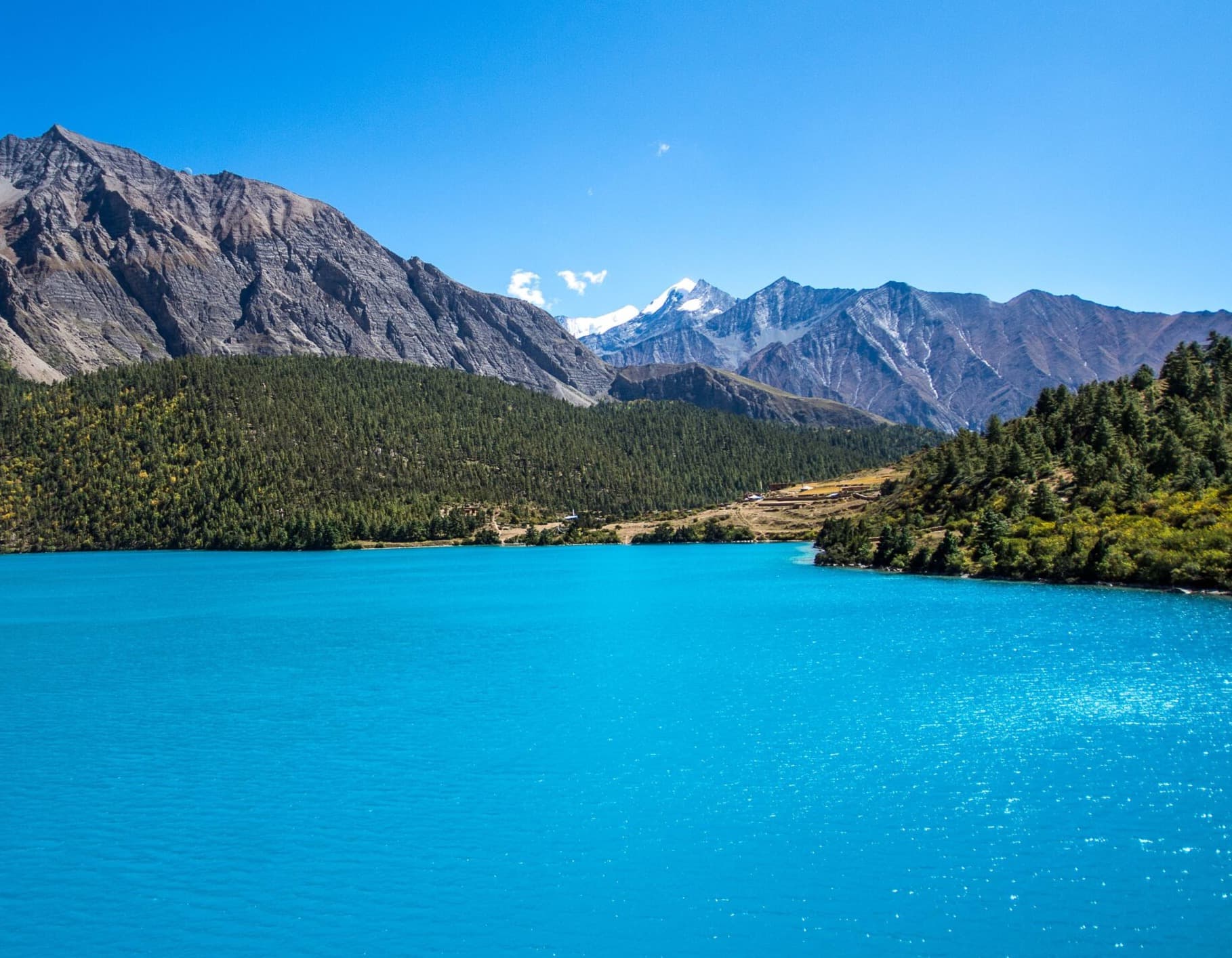
    While undergoing the Upper Dolpo Trek, you will also explore and behold the beauty of the Phoksundo Lake and of the beautiful Phoksundo Waterfall. Visit the famous Shey Gompa where the religious ambiance of the place is heightened. Crossing three major High Passes, the trekking trails of the Upper Dolpo Trek goes through wide open pastoral lands and isolated acreages of sparse woods and secluded villages. The views of the spectacular high mountains also make an appearance while trekking and their views are magnificent. The features of Upper Dolpo make the Trek one of the most exquisite journeys in Nepal. Because of its difficult topography, not many people visit Upper Dolpo, thus making it an ideal off-the-beaten-path trekking experience; but despite its isolation, it is one of the best places to cherish the natural beauty comprising of snow-capped mountains in the north and river basins of Bheri, Suligad and Rupagad with their small and large cascades going through rocky gorges and between huge boulders. The coruscating forests and woodlands of the Dolpo region are a home to varieties of wild birds and animals that make up around 197 species of birds and 32 species of mammals. During your travel, you can also come across beautiful Himalayan animals like the Musk Deer, the Himalayan Blue Sheep and the rare and elusive Snow Leopard.

    Upper Dolpo was also the location setting of the Oscar-winning movie “Himalaya”. The Upper Dolpo Trek presents an opportunity to explore mystical places of the region. The relatively mysterious and unexplored lands of the region have also been responsible for Upper Dolpo to be termed as “the forbidden land”. The kingdom of Dolpo was closed to foreigners in the beginning, but you can enter this region after obtaining a restricted and expensive permit.

    The Upper Dolpo Trek begins from Juphal and passes through various beautiful landscapes to sights of gigantic mountain ranges. You will be crossing the Numa La pass at 5,190m from where the spectacular view of the Phoksundo Lake at the Ringmo village that lies inside the Phoksundo National Park can be seen. Upper Dolpo Trek is not just beautiful for its natural splendor and biodiversity but also for its unique cultural and social aspects. The people living in this region are of Tibetan origin who still have the perseverance of their primitive lifestyle and tradition. The Shay Gompa, also regarded as a spiritual center of Upper Dolpo, is a beautiful monastery that lies on the base of the Crystal Mountain. It is visited by many pilgrims each year where the ritual of Kora is performed.

    Join us in this exotic adventure where you will be exploring the beautifully secluded land of Upper Dolpo and will be going through villages that offer a rich and opulent cultural diversity!

    Detail Itinerary

    Expand all +
    1Day 01

    Arrive at Tribhuwan International Airport, Kathmandu.

    You may arrive at the Tribhuwan International Airport at any time. Once you do, you will be welcomed by our representative who will help you get transferred to your hotel. Further programs will also be explained to you.

    Overnight stay at the hotel. Breakfast Included. 

    2Day 02

    Kathmandu Valley Sightseeing Tour

    Today, the sightseeing tour will start of Kathmandu valley, and the tour will mainly maunder around the cultural heritage sites Kathmandu valley has to offer, all listed under the World Heritage List by UNESCO. The highlight of the tour includes the Kathmandu Durbar Square, the Swayambhunath Temple, the Bouddhanath Stupa and the Pashupatinath Temple. The Pashupatinath Temple is one of the most religiously reverent temples dedicated to Lord Shiva; and we can sometimes observe the cremation ritual of the Hindu people by the bank of the holy river Bagmati at the temple as well. The Bouddhanath is one of the largest Buddhist Mandala in the country. The Swayambhunath is a beautiful stupa situated atop a hill and is also known as “the Monkey Temple”. The Kathmandu Durbar Square holds old monarchial palaces of the Malla kings who ruled over the city in ancient times, along with many architecturally intricate buildings and temples. Many of the buildings in the Kathmandu Durbar Square were heavily damaged during the 2015 earthquake. Reconstruction work is underway. After the tour, we will be heading back to the hotel.

    Overnight at the Hotel, breakfast included.

    3Day 03

    Kathmandu – Nepalgunj Flight

    To get to Dolpa, generally, you have to fly to Nepalgunj first. Nepalgunj is a steaming hot city in South Western Nepal, situated in the lowlands of Terai, close to the Indian border that is just 8 kilometers away. Culturally, the areas resemble more India than upland Nepal. You can take a cycle rickshaw for a ride in around the town as well. Passing the hustle and bustle of the bazaar, you can see horse carts full of colorful people going to or coming from the Indian border. The Bageshowri Temple is one of Nepal’s most important Hindu temples and is worth a visit as well.

    Overnight at the hotel, breakfast included.

    4Day 04

    Day 04: Nepalgunj - Juphal Flight (2475 m), walk to Chhepka (2838 m), Duration: 6 Hours

    It’s just a 35 minutes flight to Juphal over steep mountain ridges with beautiful views of snowcapped mountains. The Juphal airport is just a gravel airstrip amidst the mountains, which guarantees a spectacular landing. Stepping out of the plane, you will be entering a completely different world. From a hot city in the plains, you will now have arrived in a small mountain village, situated in the midst of the Himalaya, breathing in the crispy cold air. From Juphal, you will walk down over a small path among fields with wheat and vegetables to the Thuli Bheri River, which you’ll follow further on. A big iron suspension bridge, the Dhim Bridge (99 m long) forms the entrance to the Shey Phoksundo National Park (SPNP). SPNP is Nepal’s largest National Park, established in 1984, with an area of 3,555 km². It aims to conserve the Trans-Himalayan ecosystem and the Tibetan type flora and fauna of the region. In 1998, and area of 1,349 km² surrounding the park was declared as the buffer zone, which is jointly managed by the park and local communities. (You have to pay 1000 NPR entrance fee, except people from SAARC countries, who pay 100 NPR). Next to the entrance is the small village of Suligad, where you could stop for a tea. The path then follows the Suli Khola River. Behind you, you can see a part of the Dhaulagiri Range. You will be passing small villages along the way, like Kageni (2413 m) and Sangta (2520 m), where you could stop for tea, lunch or stay for the night. The village of Sangta is famous for its cultivation of honey. It’s a great place for the delicacy of honeyed tea! While sipping your tea, you can see the bees flying in and out the beehives made from tree trunks. Just before Sangta, you will enter the forest. It’s a beautiful walk, alongside the wild flowing river, which at some parts is beautiful emerald green. The path is surrounded by pine trees, like spruce, fir, juniper and cypress and passes through small bamboo forests and walnut trees. At the other side of the river, the high rocky slopes go up steeply and are dotted with pine trees as well. At the end of the day, you will reach Chhepka, a small village surrounded by fields of millet and wheat.

    Overnight at tented camp, full board meals included.

    5Day 05

    Chhepka to Chunuwar/Amchi Hospital (3110 m), Duration: 6 Hours

    The path today goes through beautiful pine forests, with some bushes, birches, and other broadleaf trees mixed in as well. It follows the river all the time and most of it consists of flatlands that sometimes go up and sometimes go down, with a couple of steeper climbs and descents. In some parts, the valley gets very narrow and the impressive steep rocks tend to tower high above you on both sides. On the way, you will encounter local people with their mules or dzopas (crossbreed between yak and cow) loaded with things to sell. After about four hours, you will pass the village of Rechi, where there is a camping spot. On the other side of the bridge, there is a small teashop as well. The path continues on the other side of the bridge. It’s two hours more to Chunuwar. Close to Chunuwar, you can find the Amchi Hospital. This is a very interesting place and worth a visit. It is more of a clinic, which is well-frequented by the local people. An Amchi is a doctor who is educated in traditional Tibetan medicine, and always is a Lama (monk) as well. The tradition of using Tibetan medicine goes back thousands of years and uses techniques such as pulse analysis and urine analysis for diagnosis. For treatment, medicines made of herbs and minerals are used, together with physical therapies, like Tibetan acupuncture. In the Amchi Hospital, you can see a collection of herbs and minerals used to cure people. Most Dolpa people prefer to visit the Amchi over a regular doctor when they are ill. A donation is highly welcomed to keep this tradition living.

    Overnight at tented camp, full board meals included.

    6Day 06

    Trek to Ringmo/Phoksundo Lake (3733 m), Duration: 5 Hours

    It’s a short hike today to Ringmo and the Phoksundo Lake. It includes a long and sometimes steep climb of about 2 hours. Just before the top, you can see Nepal’s highest waterfall, a spectacular waterfall 167 meters high- the Phoksundo Waterfall (also called Suligad Waterfall). From the pass, you will have your first view of Phoksundo Lake. The path goes down till it gets close to the river, which you will then follow until you reach Ringmo. Ringmo is a charming village. People practice the Bonpo religion here. Bonpo is related to Buddhism, but it is a lot older than Buddhism and goes back thousands of years. The religion was founded more than 18,000 years ago by Buddha Tonpa Shenrab Miwo. It is believed that Dolpa used to be the center of the Bon kingdom; called Zhang Zhung, a big and powerful kingdom in present Western and Northwestern Tibet and its surroundings. In Dolpo, you can still find a big concentration of Bonpo practitioners. In the 7th Century, Zhang Zhung was defeated by the Buddhist kingdom of Tibet, and Bonpo disappeared almost completely. However many Bon traditions were absorbed into the Tibetan culture.

    Overnight at tented camp, full board meals included.

    7Day 07

    Ringmo/Phoksundo Lake (3733 m), Free Day

    It is essential to have an extra day in Ringmo, as your body needs time to acclimatize to the higher altitude. As the Phoksundo Lake is such a beautiful place, it’s a perfect place for a free day.

    Overnight at tented camp, full board meals included.

    8Day 08

    Ringmo/Phoksundo Lake to Chunemba (3639 m), Duration: 5 Hours

    Today, you will enter the restricted area of Inner Dolpo. Following the famous Demons Trail from the movie Himalaya (Caravan) by Eric Valli, a beautiful movie about the life of people in Dolpa who bring their yaks over difficult passes bearing salt from Tibet to trade with grain from the lowlands, you will be going to the village of Chunemba. In the movie, this trail is used during the salt caravan and one of the yaks falls in the lake here. It’s a spectacular trail, going high above the lake. In some parts, it gets very narrow due to landslides. The trail climbs to a ridge, from where you have a spectacular view of the lake, the village of Ringmo, the dark green pine forests, and the snowcapped mountain Norbung Kang (6085 m) to the south. The trail then becomes a gradual descent to the lake’s northern shore, which is a good place for lunch. After this, the trail climbs through a wide valley, crossing some streams. You will have a splendid and nearby view of the flanks and tops of the snowcapped Kanjirowa Himal (6612 m). Arriving at an alpine area with junipers, called Chuneba or Lakeside camp, which is a good place to camp, you can halt for the day.

    Overnight at tented camp, full board meals included.

    9Day 09

    Chunemba to Snowfields Camp (4400 m), Duration: 7 Hours

    The Phoksundo Valley gets quite narrow now, with high rock walls on both sides. You will have to cross a couple of streams. After about half an hour, you will be leaving the main valley and entering a narrow gorge. It’s a long and steep climb through the steep-sided valley. The campsite is Snowfields Camp, a name given by Peter Mathieson in his famous book “The Snow Leopard”. It’s at the foot of the pass that will bring you into the heart of Inner Dolpo tomorrow.

    Overnight at tented camp, full board meals included.

    10Day 10

    Trek to Shey Gompa (4310 m) via Kang La (5375 m), Duration: 6 Hours

    It’s a long and strenuous climb of about 2½ hours over a dusty path to Kang La (5350 m), locally also called Ngadra La. Prayer flags and cairns mark the pass. At the north side of the pass, there is snow most of the time, which makes the descent a bit difficult. The descent is pretty steep for the first 45 minutes, but after this, it continues gradually for about 3 hours, till you reach the Shey Gompa. Getting nearer, you will pass red and white Chortens and Mani walls. Shey Gompa is a very small village, with a couple of houses, and the gompa (monastery). The 11th-century Gompa is located beneath the Crystal Peak on a small grassy plain, at the confluence of two rivers. It is said to be constructed by a Tibetan Buddhist, who arrived here on the back of a flying snow lion. It’s a magical place, and Shey Gompa is often called the spiritual heart of Dolpa. Every year, hundreds of pilgrims come to visit the gompa and to perform kora (clockwise circuit) of the Crystal Peak. People living here are direct descendants of Tibetans, which you can notice easily by their faces and their dress. The women wear dark dresses with colorful aprons made from yak wool. Men wear a long coat, from which they let one sleeve hanging down.

    Overnight at tented camp, full board meals included.

    11Day 11

    Rest day at Shey Gompa (4310 m)

    During this day, you can go to the Tsakang Gompa (4575 m), a monastery from the Buddhist Kagyupa sect. This gompa appears in the movie Himalaya as well. It is spectacularly located high on a red rocky slope. The trail to Tsakang Gompa partly follows the same trail as the pilgrims follow to perform the Kora of the Crystal Peak. You will probably see flocks of blue sheep in these areas. Many blue sheep live here, as the abbot of Shey Gompa imposed a ban on hunting them. Besides, in these regions you have the best chances of seeing snow leopards.

    Overnight at tented camp, full board meals included.

    12Day 12

    Shey Gompa to Namgung (4430 m) via Shey La (5000 m), Duration: 6 Hours

    Another pass to cross today, the Shey La, also called the Gelu La, of 5000 meters. The climb to the pass goes through a narrow valley. From the pass, you have a good view to the north of the arid Tibetan Plateau, which stretches out seemingly endlessly before you. To the east, you can see the Mustang. After the pass, it’s a long descent to the pastures of Namgung. Scattered in the landscape, you will see some fields with big Tibetan tents. The people in Namgung are very friendly and open. A friendly Tashi Delek (Tibetan greeting) will always be welcomed with a big smile. Overnight at tented camp, full board meals included.

    13Day 13

    Namgung to Saldang (4060 m), Duration: 3 Hours

    It’s a short hiking day today. The path goes high above the Namgung Khola (River) and then descends steeply to the village of Saldang. Saldang is the largest settlement of Inner Dolpo. It’s a spread-out, traditional agricultural village, surrounded by fields. Barley, buckwheat, and potatoes are among the few crops that can grow in this barren landscape. Besides, people live from what the yak gives them (cheese, meat, wool) and from trade. Saldang is close to the Tibetan border and some of the salt trade caravans pass through Saldang. The trading of salt for grain and rice is a century-old tradition that still prevails in Inner-Dolpo. The people from Saldang are semi-nomadic. In the warm months, they trek in the highlands with their herds of yaks and sheep. The ones who are better off let the pure nomadic people of Dolpa, the Drokpa, do this work. Sometimes you can see a camp of the Drokpa people in these areas.

    Overnight at tented camp, full board meals included.

    14Day 14

    Saldang to Sibu (4200 m), Duration: 5 Hours

    It’s a fairly easy walk to Sibu today, following the Namgung Khola southwards and passing little villages, like Namdo, along the way. The villages are surrounded by terraced fields of barley. The path goes alongside many Mani walls, chortens, and some Gompas, which makes you realize how important Buddhism is for the people of Inner Dolpo. Buddhism is interwoven in every aspect of the people’s life here. Overnight at tented camp, full board meals included.

    15Day 15

    Sibu to Lagmo Che (4570 m), Duration: 4 Hours

    The trail starts with an easy stretch following the river. The last village you will pass is the Raka. After this, you will enter a large, inhabited valley. Look out for blue sheep here. Besides, you may even come across a snow leopard. After 2 hours of trekking, the path turns away from the river and climbs steeply to a meadow of about 4570 meters, which is often used by yaks to graze. This is Lagmo Che, the base camp for climbing to the Jeng La.

    Overnight at tented camp, full board meals included.

    16Day 16

    Lagmo Che to Tokyu (4209 m) via Jeng La (5110 m), Duration: 7 Hours

    It’s a steep climb of about 2 hours to reach the next pass: the Jeng La at 5110 meters. From the pass, you have a spectacular view of the Dhaulagiri (8167 m) and many other snowcapped mountains. After the pass, you will be descending into the Tarap Valley. You will arrive at the village Tokyu (4209), a spread out village, which is the first human settlement after Raka. Tokyu is said to be the highest permanent settlement in the world. The Gompa is worth a visit and has a beautiful statue of Maitreya, the Future Buddha.

    Overnight at tented camp, full board meals included.

    17Day 17

    Tokyo to Dho Tarap (4080 m), Duration: 4 Hours

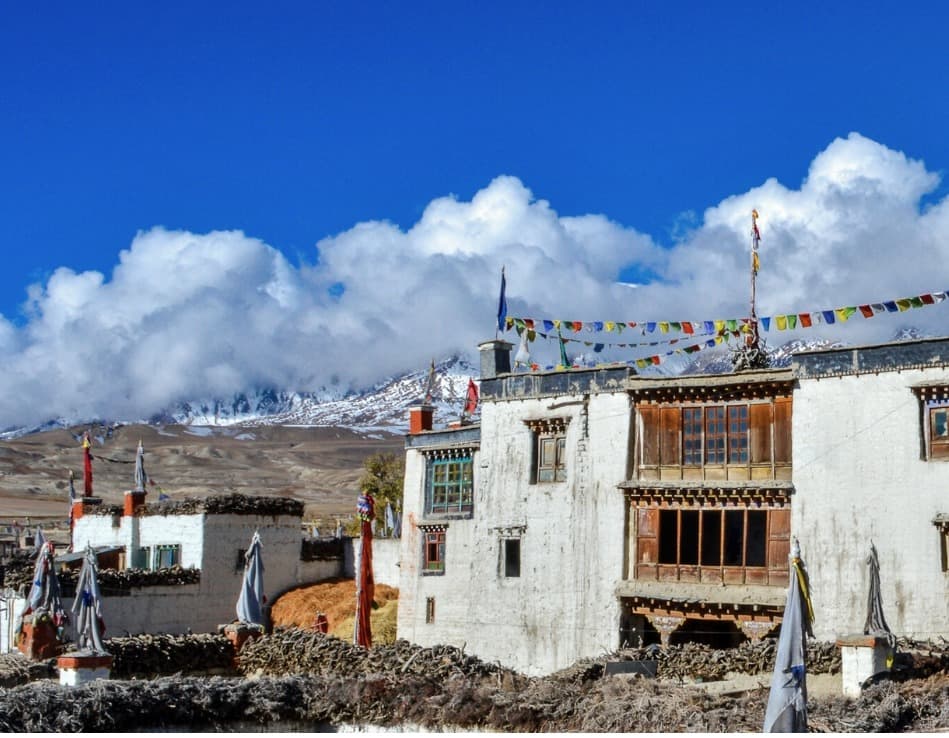
    It’s not far to Dho Tarap. On the way, you will be passing the Cristal Mountain School, which is educating children from Dho and surroundings. It is sponsored by a French NGO. If you want, you can visit the school, the teachers are very pleased to show you around. From the school, it’s about half an hour to Dho. At the entrance, you will pass a beautiful gate Chorten. Also- the people of Dho are direct descendants of Tibetans. Besides the typical dark dresses with colorful aprons, most Dho women wear bracelets of big shells and some have beautiful silver and turquoise headgear. Most men also have long hair, with a red ribbon in their hair, in the style of Tibetan Khampas. They also wear long coats, from which one sleeve hangs down. The people in Dho are very friendly and it is easy to make contact and communicate. With the Cristal Mountain School so close by, especially younger ones do speak a bit of English. Dho Tarap is a traditional agricultural village, surrounded by fields. Yaks are used to plow the land. In other villages you came across, barley, buckwheat, and potatoes are among the few crops that can grow here. But nowadays, small greenhouses enable people to grow some green vegetables as well. The people live from what the yak gives them and from trade. The houses are made of stones found in the river valley and are built in the typical Tibetan style, with small windows and flat roofs stocked with firewood.

    Overnight at tented camp, full board meals included.

    18Day 18

    Dho Tarap to Sisaul (3750 m), Duration: 4 Hours

    A short day today again, so you have all the time to explore Dho in the morning. Leaving Dho Tarap, you will come along many Mani walls and small Chortens. The path goes down, following the Tarap Khola. Gradually, you can see the landscape changing. Just before arriving at Sisaul, you have to climb to a small pass. After the pass, the valley gets narrow. It’s a short descent to Sisaul, which has a good campsite next to a tent hotel. You can choose to camp here, or on one of the spots a bit further down.

    Overnight at tented camp, full board meals included.

    19Day 19

    Sisaul to Laina Odar (3370 m), Duration: 7-8 Hours

    Soon after leaving Sisaul, you climb to a small pass with a nice Chorten. After the pass, you will see the first trees again. You mostly walk in the river valley with high rocks towering above you on both sides. The landscape is still pretty barren and this is your last chance to see the blue sheep or the snow leopard. It’s a fairly easy walk of about 3 to 3½ hours from Sisaul to Nawarpani. The path gradually goes down. In some parts, the path is beautifully carved out of the rock so that you find yourself walking in a kind of three-sided tunnel. After Nawarpani, the landscape gets greener and the path sometimes goes through pine forests, with a wonderful smell. It’s a fairly easy walk over a pretty large path, which sometimes goes very high above the river. You will reach Laina Odar where there is a tent hotel, located at the riverside.

    Overnight at tented camp, full board meals included.

    20Day 20

    Laina Odar to Lingdo (2391 m), Duration: 5 Hours

    From Laina Odar, the trail goes down pretty steep to Laisicap (2772 m). The path goes partly through forests and you will find yourself surrounded by cliffs full of pine trees, mostly spruce, fir, juniper, and cypress, some of which are huge. Sometimes the river is far below you. The walk to Laisicap takes about 3 hours. At Laisicap, you will cross the Thuli Bheri River over a large suspension bridge of 120 meters, high above the river. The trail goes down pretty steep for about 45 minutes. After this, it’s a fairly easy walk, gradually going down, with some flat parts as well. The landscape is impressive and sometimes very green. The sharp rocks are dotted with junipers and other pine trees. If you are lucky, you can see groups of large grey monkeys here. Behind you, you can see the beautiful snowcapped Kang Tokal (6294 m). Getting closer to Lingdo, you can see some other villages in the distance, like Sarakot, which is situated high on a cliff. These are the first villages you see after Dho Tarap. Passing some Mani walls and Chortens, you will be coming across Lingdo- a small village with one guesthouse with a camping site. The people who live in this region are Trail’s, a Magar group (who are Buddhist as well).

    Overnight at tented camp, full board meals included.

    21Day 21

    Lingdo to Dunai (2140 m), Duration: 5 Hours

    It’s an easy walk today. The first part goes through a rough landscape. The path is sometimes carved out of the rocks, and at a few points very narrow. There are plans to make a motorable road to Dho Tarap. After about 2 ½ hours, you will reach the small village of Bazaar (2427 m). After Bazaar, the landscape gets greener and sometimes resembles the European Alps. Rocky slopes are dotted with pine trees, mostly blue pine. At the horizon, you can see the snowcapped Kang Tokal (6294 m). The path goes slightly up and down, following the Thuli Bheri River once. Dunai is the headquarters of Dolpa District. It’s a large village, of about 2.500 people, more or less half Hindu and half Buddhist. Up the hill, there is a Buddhist monastery, the Dolpa Kendriya Gompa, which is worth a visit. It is situated at the slope at the other site of the river, overlooking Dunai. The monastery belongs to the Nyingmapa lineage, the oldest Buddhism lineage and was built in 1998. There is only one monk/lama here. If he is there, he will be happy to open the monastery for you and show you around. Inside the Gompa, you can observe a beautiful statue of the Sakyamuni Buddha (Gautama Buddha), the Kengyur (the holy scriptures of Buddhism) and big Thankas (Buddhist paintings on cotton). There is a small daily Puja (prayer ceremony) from 6-7 am and 6-7 pm.

    Overnight at tented camp, full board meals included.

    22Day 22

    Dunai to Juphal (2475 m), Duration: 4 Hours

    It’s a short walk to Juphal. After about 45 minutes, you will reach a beautiful gate Chorten (stupa), which is the entrance to the VDC (Village Development Committee) of Dunai. Inside the Chorten, you can observe some beautiful Buddhist paintings of Mandalas and important Buddhist figures. You will pass the big iron suspension bridge, which you crossed on the first day to get into the Shey Phoksundo National Park. From the bridge, it’s about 2½ – 3 hours to Juphal. The first part goes over a large path, passing through the small village of Kalagaonda. Then you will be leaving the main road and walking over a small path, through fields of barley and wheat, with walnut, peach, and apricot trees. It’s a pretty steep climb to reach Juphal. Just before arriving, you will likely pass the Hindu village of Dangiwada. Juphal is a large village with a small bazaar where it is nice to spend some time looking around.

    Overnight at a tented camp, full board meals included.

    23Day 23

    Juphal-Nepalgunj-Kathmandu Flight

    Early in the morning, you will fly to Nepalgunj. Especially the first part of the flight through the mountain valleys is spectacular. Later in the day, you will fly back to Kathmandu.

    Overnight at the hotel, breakfast included.

    24Day 24

    Leisure Day in Kathmandu

    Today, you have a leisure day in Kathmandu that you can spend doing leisure things around the city.

    Overnight at the hotel, breakfast included.

    25Day 25

    Farewell

    Approximately three hours before your scheduled flight, one of Escape Himalaya’s representatives will take you to the airport for your departure.

    If the provided schedule isn't suitable for you, we are able to create personalized travel arrangements according to your preferences and requirements.

    Customize My Trip

    Cost Details

    Cost Includes

    • All ground transportation by private vehicle including airport transfers
    • Four nights accommodation with breakfast at a 3-star category hotel in Kathmandu
    • Kathmandu valley sightseeing tours including tour guide, entry fees and private vehicle
    • Meals on full board (breakfast, lunch, dinner, tea & coffee) prepared by our expert cook
    • Twin sharing tented accommodation during the trek
    • An highly experienced guide, Sherpa, required number of porters, their food, accommodation, salary, insurance, equipment
    • Trekking equipment (two men tent, dining tent, kitchen tent, table with chairs, kitchen utensils, and other necessary equipment during the trek)
    • Flights from Kathmandu – Nepalgunj – Juphal – Nepalgunj – Kathmandu including departure taxes
    • One nights’ accommodation with breakfast in Nepalgunj
    • Safe drinking boiled water will be provided during the trek
    • A comprehensive first aid kid bag
    • All necessary permits and paper works including Upper Dolpo special permits
    • All government and local taxes
    • Office service charge

    Cost Excludes

    • Meals not specified in the 'Meal Inclusions' in the itinerary'.
    • Travel insurance – Compulsory.
    • International airfare.
    • Nepal entry visa.
    • All cold drinks such as: alcoholic beverages, mineral water, Coke, Fanta, juice, etc.
    • Personal shopping and laundry, phone, internet bill etc.
    • Personal trekking equipment.
    • Tips for trekking crews.

    Dates & Availability

    • 15th Dec 2025From Kathmandu
      8th Jan 2026To Kathmandu
      guaranteed
      US $4300Per person
      Book Now
    • 18th Dec 2025From Kathmandu
      11th Jan 2026To Kathmandu
      guaranteed
      US $4300Per person
      Book Now
    • 25th Dec 2025From Kathmandu
      18th Jan 2026To Kathmandu
      guaranteed
      US $4300Per person
      Book Now
    • 1st Jan 2026From Kathmandu
      25th Jan 2026To Kathmandu
      guaranteed
      US $4300Per person
      Book Now
    • 6th Jan 2026From Kathmandu
      30th Jan 2026To Kathmandu
      guaranteed
      US $4300Per person
      Book Now
    • 8th Jan 2026From Kathmandu
      1st Feb 2026To Kathmandu
      guaranteed
      US $4300Per person
      Book Now
    • 13th Jan 2026From Kathmandu
      6th Feb 2026To Kathmandu
      guaranteed
      US $4300Per person
      Book Now
    • 15th Jan 2026From Kathmandu
      8th Feb 2026To Kathmandu
      guaranteed
      US $4300Per person
      Book Now
    • 20th Jan 2026From Kathmandu
      13th Feb 2026To Kathmandu
      guaranteed
      US $4300Per person
      Book Now
    • 22nd Jan 2026From Kathmandu
      15th Feb 2026To Kathmandu
      guaranteed
      US $4300Per person
      Book Now
    • 27th Jan 2026From Kathmandu
      20th Feb 2026To Kathmandu
      guaranteed
      US $4300Per person
      Book Now
    • 29th Jan 2026From Kathmandu
      22nd Feb 2026To Kathmandu
      guaranteed
      US $4300Per person
      Book Now
    • 2nd Feb 2026From Kathmandu
      26th Feb 2026To Kathmandu
      guaranteed
      US $4300Per person
      Book Now
    • 5th Feb 2026From Kathmandu
      1st Mar 2026To Kathmandu
      guaranteed
      US $4300Per person
      Book Now
    • 8th Feb 2026From Kathmandu
      4th Mar 2026To Kathmandu
      guaranteed
      US $4300Per person
      Book Now
    • 9th Feb 2026From Kathmandu
      5th Mar 2026To Kathmandu
      guaranteed
      US $4300Per person
      Book Now
    • 11th Feb 2026From Kathmandu
      7th Mar 2026To Kathmandu
      guaranteed
      US $4300Per person
      Book Now
    • 12th Feb 2026From Kathmandu
      8th Mar 2026To Kathmandu
      guaranteed
      US $4300Per person
      Book Now
    • 16th Feb 2026From Kathmandu
      12th Mar 2026To Kathmandu
      guaranteed
      US $4300Per person
      Book Now
    • 18th Feb 2026From Kathmandu
      14th Mar 2026To Kathmandu
      guaranteed
      US $4300Per person
      Book Now
    • 19th Feb 2026From Kathmandu
      15th Mar 2026To Kathmandu
      guaranteed
      US $4300Per person
      Book Now
    • 26th Feb 2026From Kathmandu
      22nd Mar 2026To Kathmandu
      guaranteed
      US $4300Per person
      Book Now
    • 5th Mar 2026From Kathmandu
      29th Mar 2026To Kathmandu
      guaranteed
      US $4300Per person
      Book Now
    • 9th Mar 2026From Kathmandu
      2nd Apr 2026To Kathmandu
      guaranteed
      US $4300Per person
      Book Now
    • 12th Mar 2026From Kathmandu
      5th Apr 2026To Kathmandu
      guaranteed
      US $4300Per person
      Book Now
    • 18th Mar 2026From Kathmandu
      11th Apr 2026To Kathmandu
      guaranteed
      US $4300Per person
      Book Now
    • 19th Mar 2026From Kathmandu
      12th Apr 2026To Kathmandu
      guaranteed
      US $4300Per person
      Book Now
    • 21st Mar 2026From Kathmandu
      14th Apr 2026To Kathmandu
      guaranteed
      US $4300Per person
      Book Now
    • 22nd Mar 2026From Kathmandu
      15th Apr 2026To Kathmandu
      guaranteed
      US $4300Per person
      Book Now
    • 25th Mar 2026From Kathmandu
      18th Apr 2026To Kathmandu
      guaranteed
      US $4300Per person
      Book Now
    • 26th Mar 2026From Kathmandu
      19th Apr 2026To Kathmandu
      guaranteed
      US $4300Per person
      Book Now

    Travellers‘ Reviews

    Write a Review
    • Sheryl Ang

      14th Dec 2024

      Gorgeous Views!

      Excellent trekking experience with Escape Himalaya to Kala Patthar! Everything went seamlessly, and my guide ensured we were safe and comfortable at all times, even in the high altitude. Will definitely choose EH again when I am back in Nepal for more hiking! The country is so beautiful and just has so much to offer!

      Read more +
    • Tony W

      18th Apr 2024

      Amazing Manaslu Circuit with Phurba & Ram

      Just back from a fantastic 2 week trek around the Manaslu Circuit including Larke Pass (5100m). The weather was perfect and the views were outstanding!!

      Our guide Phurba Sherpa was excellent. Super knowledgeable and helpful at all times and always made sure we had a fantastic trip.

      Our porter, Ram Badhadur Magar was also a rockstar. He was super professional and always arrived before us every day. He was also super friendly and helpful too.

      Thanks to Phurba, Ram for always smiling and for a fantastic trip. Would highly recommend them to anyone interested in trekking in Nepal

      Read more +
    • Kevin P

      3rd Apr 2024

      Everest base camp trek - Mar-Apr 2024

      My 60 year old pals set out in hope on this adventure. In late March. We had our guide Raj Kumar and two porterd Janak and Ramesh. All three were stars. We changed our schedule - no problem. I would not have made it without Raj. I cannot thank him enough. Janak often took my back pack on steep climbs where I was struggling. This is a truly majestic and spiritual trek and I would encourage using Escape Himalaya and request this team of guide and porters if you want to give yourself the best chance of finishing and making best use of your time.
      Read more +

    FAQS

    Expand All (12)

    Q1. Is a visa required for entry into Nepal?

    Yes, the majority of travelers to Nepal will need a visa. You can acquire one upon arrival at Tribhuvan International Airport in Kathmandu or at land border crossings. Alternatively, you have the option to apply for a visa beforehand at a Nepalese embassy or consulate in your home country.

    Q2. Will there be someone to pick me up at the airport when I arrive?

    Yes, Escape Himalaya offers airport pickup services for our clients. We recognize the significance of a seamless arrival and strive to guarantee a trouble-free beginning to your journey. When you reserve a trek or tour with us, you can coordinate with our team to schedule a representative to greet you at the airport upon your arrival.

    Look for our staff member holding a signboard bearing your name or the company's name for easy recognition. Providing us with your flight details ahead of time, including your flight number and estimated arrival time, enables us to make suitable arrangements for your pickup.

    Q3. As a solo traveler, are you able to join a group for your journey?

    Certainly! As a solo traveler, you're welcome to join one of the groups organized by Escape Himalaya. We frequently arrange group treks and tours that cater to individuals traveling alone. Joining a group not only allows you to meet other travelers but also offers the opportunity to share experiences and potentially lower costs.

    When reaching out to Escape Himalaya, simply inform us that you're a solo traveler interested in joining a group. We'll then provide details about available group departures and assist you in selecting a trek or tour that aligns with your preferences and travel dates.

    Q4. What are the types of hotel you use in Kathmandu?

    Generally, we use the best available 3-star, 4-star, and 5-star category hotels for travelers' accommodation in Kathmandu. Meanwhile, travelers can upgrade or prolong accommodation with us as required.

    The costs to prolong or upgrade hotel accommodation in Kathmandu may vary based on preferred hotel rates.

    Q5. Would it be possible for me to upgrade my accommodation to a luxury hotel in Kathmandu?

    Certainly! You have the option to upgrade your accommodation to a luxury hotel in Kathmandu. If you wish to elevate your stay from the standard 3-star hotel provided by Escape Himalaya, simply let us know, and we can arrange the upgrade for you. However, please bear in mind that availability and pricing for luxury hotels may fluctuate based on the hotel and the timing of your visit.

    Q6. Which destinations are commonly favored by tourists visiting Nepal?

    Nepal boasts breathtaking natural landscapes and a profound cultural legacy. Among the sought-after tourist spots are Kathmandu (the capital), Pokhara, Chitwan National Park, Lumbini (the birthplace of Lord Buddha), Bhaktapur, as well as the renowned trekking regions of Annapurna, Everest, Langtang, Manaslu, and Upper Mustang.

    Q7. Do we need a visa before coming to Nepal?

    Yes, most travelers need a visa to enter Nepal. However, the process for obtaining a visa depends on your nationality. You can either obtain a visa from the diplomatic consulate office of Nepal in your respective country or apply for an “On Arrival” visa at the entry checkpoints of Nepal. Please click this link to get more information on ways to issue a tourist visa. Also please see the visa fee here below:

    On-Arrival Visa Fee at Entry Points of Nepal:

    • 15 Days – 30 USD
    • 30 Days – 50 USD
    • 90 Days – 125 USD

    Indian nationals do not need to have a visa to enter Nepal however they need to bring an official document such as a Passport or Election card (issued by the Election Commission) that proves their identity.

    Q8. Which one is better: Group or Solo (private) trek?

    Escape Himalaya offers both group and solo trek to Everest Base Camp. However, to choose to join which tour style completely depends upon the traveler itself.

    If you are happy to meet people from other parts of the world and join in an experience of a lifetime with fellow travelers, then going for a group trek is also best.

    However, if you prefer freedom and flexibility, trekking solo (private) will give you the independence to set your own pace and choose your itinerary. You will have the flexibility to make spontaneous decisions. You will not be bound by a group schedule and choose to lead your journey as you wish and even modify the plan if needed.

    Q9. Who will come to pick me up at the airport on arrival day?

    Upon your arrival in Kathmandu, one of our representative staff will be there to pick you up at the airport holding a display board of Escape Himalaya. This service is included in all their trekking packages to ensure a smooth and comfortable start to your adventure. The representative will escort you to your hotel, where you will be staying as per the package itinerary. This service is designed to provide you with a hassle-free experience right from the beginning of your trip​.

    Q10. Is it possible to travel solo in Nepal?

    Yes, it is possible to travel solo in Nepal, and Escape Himalaya supports solo travelers with tailored services. They recommend hiring a guide for safety and better navigation, especially on complex trails. The company provides both male and female guides and ensures reputable accommodations for comfort and security. They also offer airport pickup and drop-off services for a smooth travel experience. Many solo travelers, including solo female trekkers, have reported positive experiences, highlighting the professionalism and support of Escape Himalaya throughout their journey.

    Q11. What type of trekking duffle bag and day pack should I bring?

    For trekking in Nepal, you will need a 60-80 liter duffle bag made of durable, water-resistant material. Escape Himalaya provides a duffle bag for your gear, carried by porters. For your day pack, choose a 20-30 liter pack with adjustable straps, hydration compatibility, and multiple compartments. Ensure both bags are durable and comfortable for the trek​.

    Q12. What kind of trekking boots should I bring?

    For trekking in Nepal, bring mid to high-cut waterproof boots with a breathable material like Gore-Tex. Ensure they have a snug fit, a lightweight design, and high-traction rubber soles like Vibram. Break them in before your trek to avoid blisters and discomfort.

    You may also Like

    • Lower Dolpo Trek
      from $4300

      Lower Dolpo Trek

      17 Nights 18 Days
    • Upper Mustang Trek
      01 reviews
      from $1840

      Upper Mustang Trek

      15 Nights 16 Days
    • Lower Mustang Trek
      from $1020

      Lower Mustang Trek

      13 Nights 14 Days