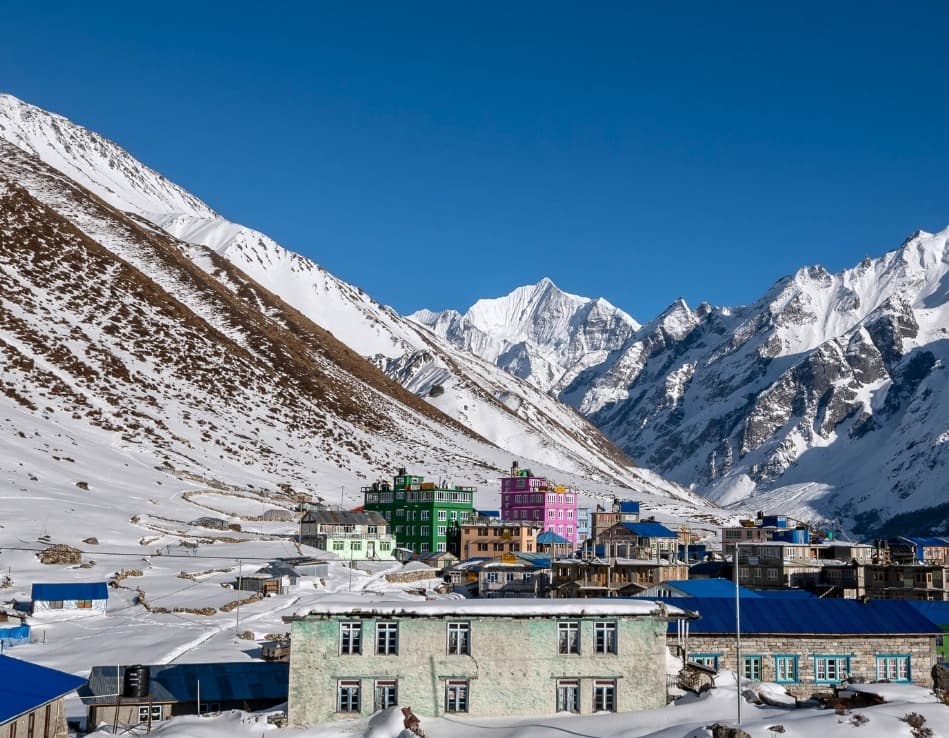
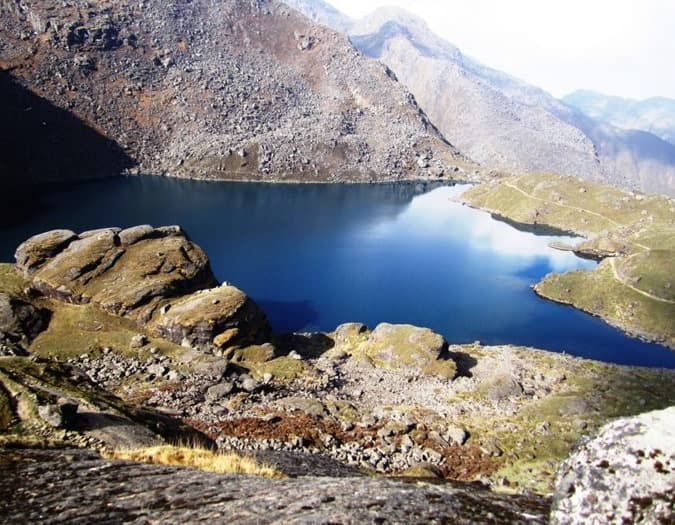
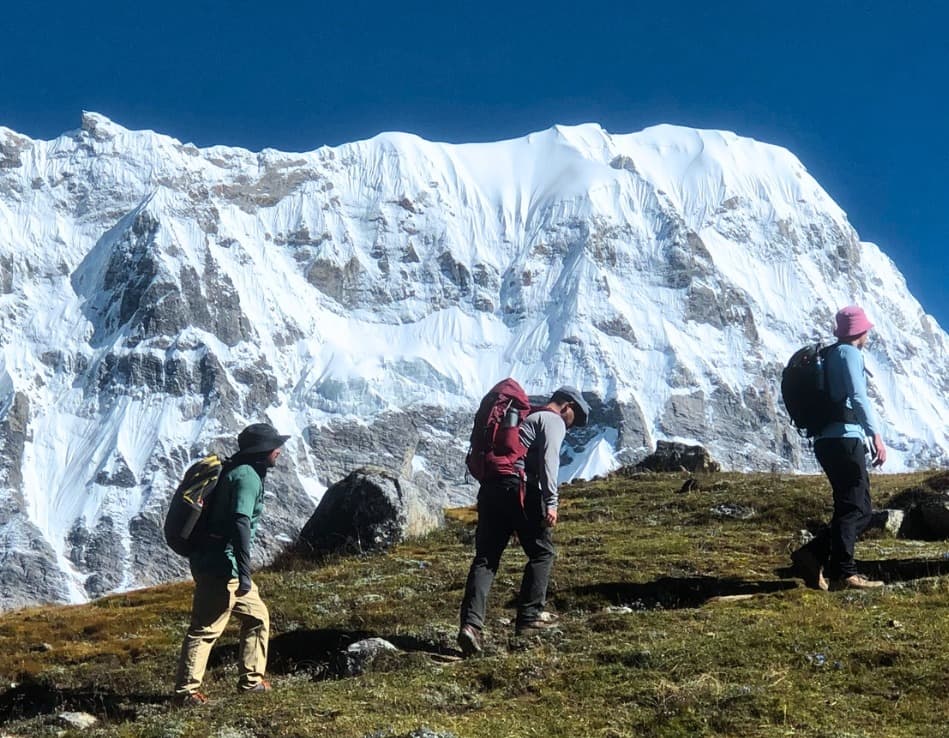
Helambu is located approximately 72 kilometers from Kathmandu in the northeast. It is one of the most beautiful trekking destinations in the country. The Helambu Short Trek gives you a perfect picture of beauty in a moderate climatic ambiance. The word "Helambu" is derived from the name of a caste, "Helmu," who resided in the Tarkeghyang village at the time. Today, they are known as Sherpas. The Tamang and Sherpa settlements of the Helambu region give insight into their culture and way of life. Indeed, with majestic Himalayan views, trudging through verdant forests and acreages of pine and birch, it is a marvelous adventure.
The trek starts with a drive from Kathmandu to Sundarijal (1,350m) and a hike to Chisapani. You will also be excursing through the Shivapuri National Park, home to many wild lives and plant species. Passing through the settlements at Mulkharka, you can encounter the Tamang people closely and visit many monasteries. Further on the trails of the Helambu Trek, you would be traversing through the passes of Pathi Bhanjyung and Gil Bhanjyang.
Magnificent views of the Himalayan ranges greet the eye at Yurin Danda. Tarkeghyang is a dainty Sherpa village where you can enjoy the alpine vegetation complimented by lovely rhododendron trees. You will see a beautiful natural quintessence of the woods and emerald flora when walking to Melamchi Gaon.
Moreover, Escape Himalaya provides an excellent rendering of services and ensures that customers get the best traveling experience. The Helambu Trek package incorporates the region's beautiful natural and cultural quintessence in a relatively short time. Join us in this beautiful adventure to experience Helambu's Himalayan magnificence, natural winsomeness, and vibrant culture.
Alternative Treks To Consider!
We also have alternative trekking options in the Langtang Region. For instance, you can go to LangtangValley Trek, which lets you wander in the region's beautiful valley. Likewise, Langtang Gosainkunda Trek combines the destinations of three settings into a single context. The Tamang Heritage Trail lets you excurse through the settlements of the local people and observe their traditions and cultures up close. You can also opt for a customized itinerary as well if you wish to do so.
Detail Itinerary
Expand all +
1Day 01
Arrive at Tribhuwan International Airport, Kathmandu
As you arrive at the Tribhuwan International Airport in Kathmandu, you will be greeted by one of our representatives from Escape Himalaya. You will then be transferred to your hotel where you will proceed to check-in. There are no planned activities for the day, so you may relax and get to know the lay of the land at the hotel.
Overnight Stay at the Hotel. Breakfast Included.
Max. Elevation:1336m.
2Day 02
Drive to Sundarijal and trek to Chisapani (2300m/7545ft), Duration: 4 Hours
On this day, we will drive to Sundarijal (1350m) from Kathmandu and trek to Chisapani taking around 4 hours of time. We will pass a small hydroelectric plant on the way. The path then moves all the way through the Shivapuri National Park, founded in 2002. We will also pass by the settlement named Mulkharka which is typically inhabited by the Tamang groups. After that, we will walk along through wooded areas of rhododendrons and oak trees to reach Chisapani, set at the height of 2300m.
Overnight at the Guesthouse, breakfast, lunch, and dinner included.
Max. Elevation:1350m.
3Day 03
Chisapani to Kutumsang (2446m/8022ft), Duration: 5 Hours
We will continue our walk descending from Chisapani and reach a plane path that traverses the fields. We will also walk down through Pathi Bhanjyang until we get to the Gul Bhanjyang Pass. The path then ascends along the edges from Gul Bhanjyang to one more pass lying at an altitude of 2620m. We will then move downhill to Kutumsang located at 2446m.
Overnight at the Guesthouse, breakfast, lunch, and dinner included.
Max. Elevation:2446m.
4Day 04
Kutumsang to Tharipati (3650m/11972ft), Duration: 5 Hours
We will ascend from Kutumsang to reach Tharipati lying at 3650m on this day, which takes around 5 hours. We will walk on a vertical path mostly passing all the way through rhododendron and fir forests. At this point, we will see no permanent settlements. We will also continue walking to Yurin Danda which bestows wonderful views of the Himalayan ranges. To conclude for this day, we will reach Tharipati.
Overnight at the Guesthouse, breakfast, lunch, and dinner included.
Max. Elevation:3650m.
5Day 05
Tharipati to Tarkeghyang (2743m/8997ft), Duration: 5 hours
From Tharepati, we will walk on a path that steeply descends all the way through the pine and rhododendron woods. We will also discover the grand views downhill into the Helambu Valley. Also, traverse across to Numbur and Jugal Himals in the Solukhumbu to reach Melamchi Gaon. Melamchi Gaon is a village surrounded by stunning wooded acreages. It is largely occupied by Sherpa people. Here you can also explore around to learn about Sherpa culture. We will also walk down to go across the Melamchi River. From here, we will ascend gradually to Tarkeghyang, passing all the way through Sherpa settlements. Tarkeghyang, located 2743m high, is a striking Sherpa village holding the largest and oldest monastery. Tarkeghyang is popular as Helambu itself, as the origin of the word is derived from the caste –Helmu. Most of the Sherpa inhabitants living here are formerly from the Helmu caste.
Overnight at lodge. Breakfast, lunch, and dinner are included.
Max. Elevation:2743m.
6Day 06
Tarkeghyang to Shermathang (2621m/8596ft), Duration: 4 Hours
We will have a relatively easier walk today. We will trek ahead from Tarkeghyang to Shermathang following forests, waterfalls and streams. The path moves around the broad valley and concludes between Gangyul and Parachin. Gangyul is a Sherpa settlement from where we will walk to Shermathang. Here, we can visit a Buddhist monastery located at the top point of the village and explore around to learn about the culture.
Overnight at the Guesthouse, breakfast, lunch, and dinner included.
Max. Elevation:2621m.
7Day 07
Shermathang- Melamchi Pul Bazaar –Kathmandu, Duration: 3-4 Hours Hike and 2 Hours Drive
We will have a short walk that takes us to the Melamchi Pul Bazaar. On the way, we will also pass by several Sherpa villages. As we reach the Melamchi Pul Bazaar after walking for approximately 4 hours, we will drive to Kathmandu which takes around 2 hours.
Overnight at a Hotel in Kathmandu, Breakfast included.
Max. Elevation:2332m.
8Day 08
Farewell
Today marks the end of the trekking trip. You will be escorted by one of our Escape Himalaya representatives to the airport from where you will depart.
Max. Elevation:1335m.
If the provided schedule isn't suitable for you, we are able to create personalized travel arrangements according to your preferences and requirements.
Pick the perfect time to go! Spring (March-May) and autumn (Sept-Nov) (Dec/Jan, which is a bit colder but weather perfect ) offer clear skies and stunning views.
Additional Cost Planning
Apart from the major costs of your helambu trek package, you will need to budget for certain additional fees. Here's a simple plan to help you budget while still having a good time:
Trail Necessities:
Hot Showers: Tea houses may charge $2-3 for a warm shower, particularly at higher elevations.
Charging Electronics: Tea houses may allow you to charge your electronics for $1-3 per piece. Bringing a portable charger is convenient.
Food & Treats:
Extra Meals: Depending on where you are, you may want to purchase more snacks or lunches, which cost between $5 and $10.
Drinks: Expect to spend $1-3 per water bottle. Other drinks may be more expensive, so use a reusable bottle and water filter to save money and prevent waste.
Staying Connected:
Wi-Fi: While many guest houses offer Wi-Fi, it can be slow and expensive, typically costing US$2-3 per day. If you need internet access, consider downloading maps and entertainment beforehand.
Remember that prices might vary, so use these estimates as a guideline.
Please look at your spending patterns for drinks, snacks, and gifts.
Note: Carry Nepali Rupees for incidental expenses. While some tea shops accept US dollars, possessing the local currency eliminates conversion problems and ensures you have the correct amounts for smaller transactions.
By budgeting for these things, you'll be better prepared to deal with unexpected costs and enjoy your Langtang Valley route
Packing Guide for Helambu Trek
Get ready for your helambu Trek with confidence, knowing that you have all the necessary gear and essentials to make your journey safe, comfortable, and memorable. Packing light and knowing exactly what to bring is essential for the best hiking experience. You can refer to our comprehensive Equipment Checklist to easily pack everything you need for your trek to helambu.
If you need specific information about what to bring or how to pack equipment, feel free to contact us.
Complimentary Gear for Trekking Days
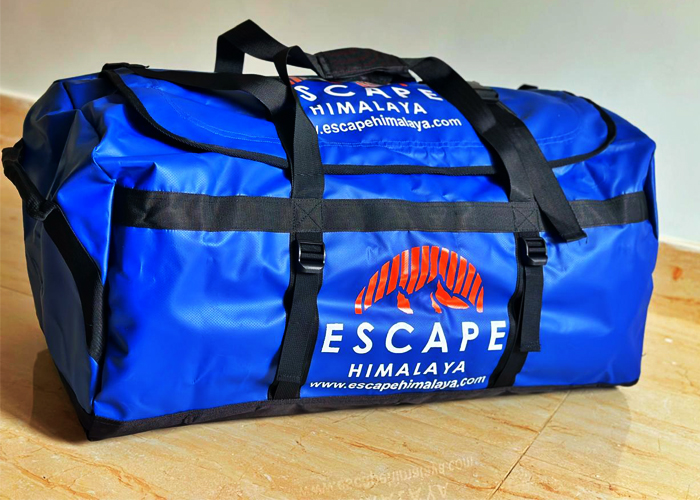
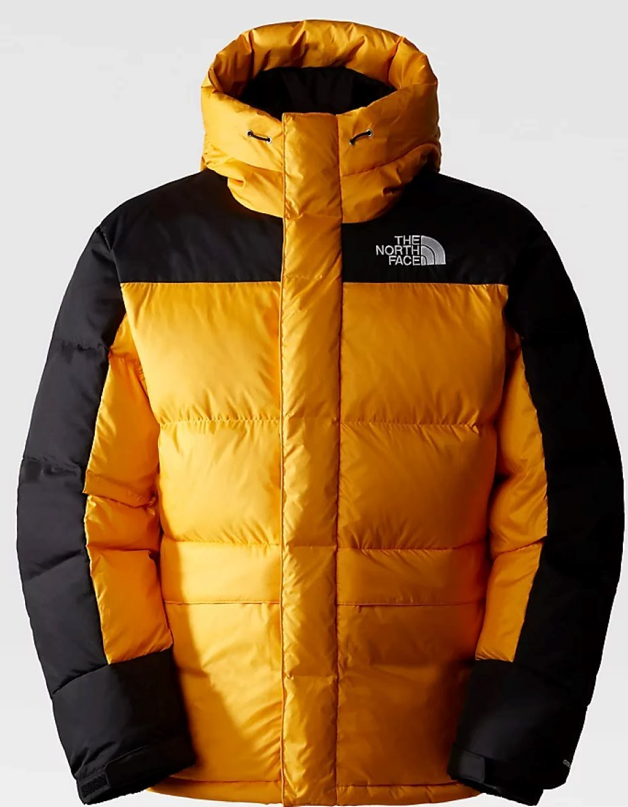
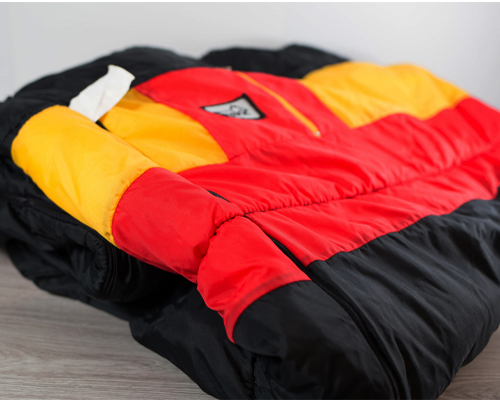
We provide a top-of-the-line 120-liter Duffel Bag for efficient trek packing, a certified -20°C Down Jacket for ultimate cold protection, and a high-quality four-season Sleeping Bag, ensuring unparalleled warmth and coziness during even the chilliest mountain nights.
Trekking Duffle BagDown JacketSleeping Bag
Trekking Duffel Bag
Duffle bags are commonly used for traveling, sports, outdoor activities, or temporary storage. They are used for carrying clothing, personal items, and electronics or sports gear during travel. The size of the duffle bag varies according to one's needs and requirements. They come in different sizes, from small to large travel duffle bags, and are capable of holding required gear during travel. Generally, duffle bags are used to carry loads up to 15 kg in all treks,
We arrange the duffle bags that hold up to 120 liters of storage capacity and are also waterproof, which helps in the rainy environment by protecting the materials inside the bag. Generally, the porter carries these duffle bags during the trek. Bring a small or medium carrying bag with personal materials and gadgets. Please remember that your luggage and suitcase will be securely managed and safeguarded at our hotel while you enjoy your trek, and we will quickly return to you once you complete your trek.
At Escape Himalaya, we provide a meticulously crafted checklist of essential trekking gear. This is our way of ensuring you're fully equipped for your Himalayan adventure, backed by our expertise and care in selecting the right gear for you.
Down Jacket
A down jacket, also known as a puffer jacket, is a quilted coat filled with soft feathers from a duck or goose. It's a popular choice for cold climates and higher altitudes due to its excellent warmth-to-weight ratio. Hikers, trekkers, and backpackers prefer them for their extreme comfort, lightweight, and compressibility, making them easy to pack without taking up much space. The down jacket we provide is ideal for wearing and sleeping during high-altitude treks, providing excellent insulation and comfort. Please return it once the trek is completed to preserve it for the next adventurers.
It is also ideal for wearing and sleeping during high-altitude treks, providing excellent insulation and comfort. Please return it once the trek is completed to preserve it for the next adventures.
The sleeping bags we use are mummy-shaped, with a zip that opens and closes, keeping the top tight around you. They are used in cold and wet climates at high altitudes( -20°C to -25°C maximum temperature), giving you protection and comfort. They are also lightweight and compact, making them easy to carry on long treks. The sleeping bag is returned after the trek, helping us maintain our gear for future adventurers.
Excellent trekking experience with Escape Himalaya to Kala Patthar! Everything went seamlessly, and my guide ensured we were safe and comfortable at all times, even in the high altitude. Will definitely choose EH again when I am back in Nepal for more hiking! The country is so beautiful and just has so much to offer!
Tony W
18th Apr 2024
Amazing Manaslu Circuit with Phurba & Ram
Just back from a fantastic 2 week trek around the Manaslu Circuit including Larke Pass (5100m). The weather was perfect and the views were outstanding!!
Our guide Phurba Sherpa was excellent. Super knowledgeable and helpful at all times and always made sure we had a fantastic trip.
Our porter, Ram Badhadur Magar was also a rockstar. He was super professional and always arrived before us every day. He was also super friendly and helpful too.
Thanks to Phurba, Ram for always smiling and for a fantastic trip. Would highly recommend them to anyone interested in trekking in Nepal
Kevin P
3rd Apr 2024
Everest base camp trek - Mar-Apr 2024
My 60 year old pals set out in hope on this adventure. In late March. We had our guide Raj Kumar and two porterd Janak and Ramesh. All three were stars. We changed our schedule - no problem. I would not have made it without Raj. I cannot thank him enough. Janak often took my back pack on steep climbs where I was struggling. This is a truly majestic and spiritual trek and I would encourage using Escape Himalaya and request this team of guide and porters if you want to give yourself the best chance of finishing and making best use of your time.
FAQS
Expand All (13)
Q1. Is a visa required for entry into Nepal?
Yes, the majority of travelers to Nepal will need a visa. You can acquire one upon arrival at Tribhuvan International Airport in Kathmandu or at land border crossings. Alternatively, you have the option to apply for a visa beforehand at a Nepalese embassy or consulate in your home country.
Q2. Will there be someone to pick me up at the airport when I arrive?
Yes, Escape Himalaya offers airport pickup services for our clients. We recognize the significance of a seamless arrival and strive to guarantee a trouble-free beginning to your journey. When you reserve a trek or tour with us, you can coordinate with our team to schedule a representative to greet you at the airport upon your arrival.
Look for our staff member holding a signboard bearing your name or the company's name for easy recognition. Providing us with your flight details ahead of time, including your flight number and estimated arrival time, enables us to make suitable arrangements for your pickup.
Q3. As a solo traveler, are you able to join a group for your journey?
Certainly! As a solo traveler, you're welcome to join one of the groups organized by Escape Himalaya. We frequently arrange group treks and tours that cater to individuals traveling alone. Joining a group not only allows you to meet other travelers but also offers the opportunity to share experiences and potentially lower costs.
When reaching out to Escape Himalaya, simply inform us that you're a solo traveler interested in joining a group. We'll then provide details about available group departures and assist you in selecting a trek or tour that aligns with your preferences and travel dates.
Q4. What are the types of hotel you use in Kathmandu?
Generally, we use the best available 3-star, 4-star, and 5-star category hotels for travelers' accommodation in Kathmandu. Meanwhile, travelers can upgrade or prolong accommodation with us as required.
The costs to prolong or upgrade hotel accommodation in Kathmandu may vary based on preferred hotel rates.
Q5. Would it be possible for me to upgrade my accommodation to a luxury hotel in Kathmandu?
Certainly! You have the option to upgrade your accommodation to a luxury hotel in Kathmandu. If you wish to elevate your stay from the standard 3-star hotel provided by Escape Himalaya, simply let us know, and we can arrange the upgrade for you. However, please bear in mind that availability and pricing for luxury hotels may fluctuate based on the hotel and the timing of your visit.
Q6. Which destinations are commonly favored by tourists visiting Nepal?
Nepal boasts breathtaking natural landscapes and a profound cultural legacy. Among the sought-after tourist spots are Kathmandu (the capital), Pokhara, Chitwan National Park, Lumbini (the birthplace of Lord Buddha), Bhaktapur, as well as the renowned trekking regions of Annapurna, Everest, Langtang, Manaslu, and Upper Mustang.
Q7. What is your cancellation policy?
Escape Himalaya's cancellation policy states that the initial 20% deposit made upon booking is non-refundable and will be considered a cancellation fee. This policy is effective immediately upon booking confirmation. If you cancel your trip, this deposit is retained by Escape Himalaya.
However, if you have paid more than the 20% deposit, the cancellation fee will be reduced to 20%, and the remaining balance will be refunded via the original payment method.
Alternatively, they offer a flexible postponement policy. You can postpone your trip without any additional charge if you notify them at least one day before the scheduled departure. This allows you to reschedule your trip to a later date without losing your deposit.
Q8. Do we need a visa before coming to Nepal?
Yes, most travelers need a visa to enter Nepal. However, the process for obtaining a visa depends on your nationality. You can either obtain a visa from the diplomatic consulate office of Nepal in your respective country or apply for an “On Arrival” visa at the entry checkpoints of Nepal. Please click this link to get more information on ways to issue a tourist visa. Also please see the visa fee here below:
On-Arrival Visa Fee at Entry Points of Nepal:
15 Days – 30 USD
30 Days – 50 USD
90 Days – 125 USD
Indian nationals do not need to have a visa to enter Nepal however they need to bring an official document such as a Passport or Election card (issued by the Election Commission) that proves their identity.
Q9. Which one is better: Group or Solo (private) trek?
Escape Himalaya offers both group and solo trek to Everest Base Camp. However, to choose to join which tour style completely depends upon the traveler itself.
If you are happy to meet people from other parts of the world and join in an experience of a lifetime with fellow travelers, then going for a group trek is also best.
However, if you prefer freedom and flexibility, trekking solo (private) will give you the independence to set your own pace and choose your itinerary. You will have the flexibility to make spontaneous decisions. You will not be bound by a group schedule and choose to lead your journey as you wish and even modify the plan if needed.
Q10. Who will come to pick me up at the airport on arrival day?
Upon your arrival in Kathmandu, one of our representative staff will be there to pick you up at the airport holding a display board of Escape Himalaya. This service is included in all their trekking packages to ensure a smooth and comfortable start to your adventure. The representative will escort you to your hotel, where you will be staying as per the package itinerary. This service is designed to provide you with a hassle-free experience right from the beginning of your trip.
Q11. Is it possible to travel solo in Nepal?
Yes, it is possible to travel solo in Nepal, and Escape Himalaya supports solo travelers with tailored services. They recommend hiring a guide for safety and better navigation, especially on complex trails. The company provides both male and female guides and ensures reputable accommodations for comfort and security. They also offer airport pickup and drop-off services for a smooth travel experience. Many solo travelers, including solo female trekkers, have reported positive experiences, highlighting the professionalism and support of Escape Himalaya throughout their journey.
Q12. What type of trekking duffle bag and day pack should I bring?
For trekking in Nepal, you will need a 60-80 liter duffle bag made of durable, water-resistant material. Escape Himalaya provides a duffle bag for your gear, carried by porters. For your day pack, choose a 20-30 liter pack with adjustable straps, hydration compatibility, and multiple compartments. Ensure both bags are durable and comfortable for the trek.
Q13. What kind of trekking boots should I bring?
For trekking in Nepal, bring mid to high-cut waterproof boots with a breathable material like Gore-Tex. Ensure they have a snug fit, a lightweight design, and high-traction rubber soles like Vibram. Break them in before your trek to avoid blisters and discomfort.