The Everest Base Camp Heli Return Trek is built around one idea: walk every kilometer of the classic EBC route on the way up, and fly directly back to Kathmandu by helicopter on the way home. You do not retrace a single step of the trail. Instead, after summiting Kala Patthar at 5,545 meters before dawn on Day 10, you return to Gorakshep for breakfast and board a helicopter that covers in 45 minutes what would otherwise take four more days of walking.
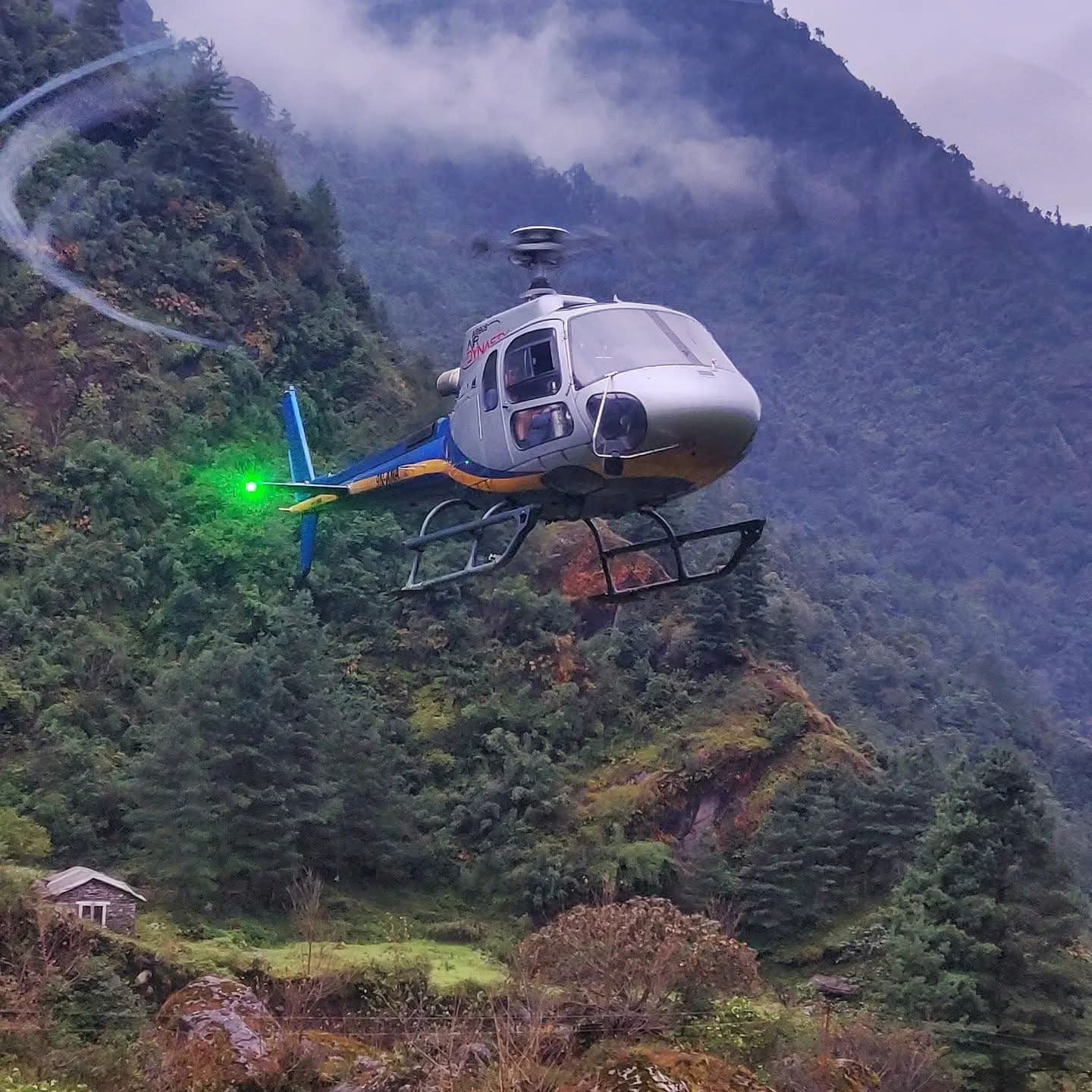
This is the only Escape Himalaya EBC package where the helicopter flies directly from Gorakshep to Kathmandu in a single flight. The Everest Base Camp Heli Shuttle Trek lands first at Lukla and takes a fixed-wing flight to Kathmandu the following morning. This package skips Lukla entirely on the return, meaning you go from the highest point of the trek to your Kathmandu hotel in the same day.
The 11-day itinerary covers the full Khumbu corridor: Phakding, Namche Bazaar, Tengboche, Dingboche, Lobuche, Gorakshep, Everest Base Camp, and Kala Patthar. Two rest days are built in at Namche Bazaar and Dingboche to manage altitude properly before the push to Base Camp. Both rest days are active, not passive, involving day hikes to higher elevations and returning to sleep lower, which is the most effective way to help the body adjust.
The helicopter return is not just a practical decision. Flying over the Khumbu Glacier and the icefall gives you a perspective on the terrain that is simply not available from the ground. From the trail, the icefall looks like a wall of ice above Base Camp. From the helicopter, you see the full crevasse system, the glacier's flow lines between Everest and Lhotse, and the way the entire Khumbu range connects as a single mountain system. Most trekkers say this 45-minute flight changes how they understand everything they just walked through.
The minimum group size is two people, tied to the shared helicopter logistics from Gorakshep. Solo trekkers can join a departure with another booked trekker, or arrange a private charter at additional cost. Two permits are included in the package: the Sagarmatha National Park Entry Permit and the Khumbu Pasang Lhamu Rural Municipality Fee. Both are managed before arrival, with nothing to arrange on the day.
For trekkers comparing options, the Everest Base Camp Trek (16 Days) covers the full walking route both ways, and the Everest Base Camp Luxury Trek follows the same route with upgraded lodge accommodation throughout.
Route Overview: The Full Khumbu Trail From Lukla to Gorakshep
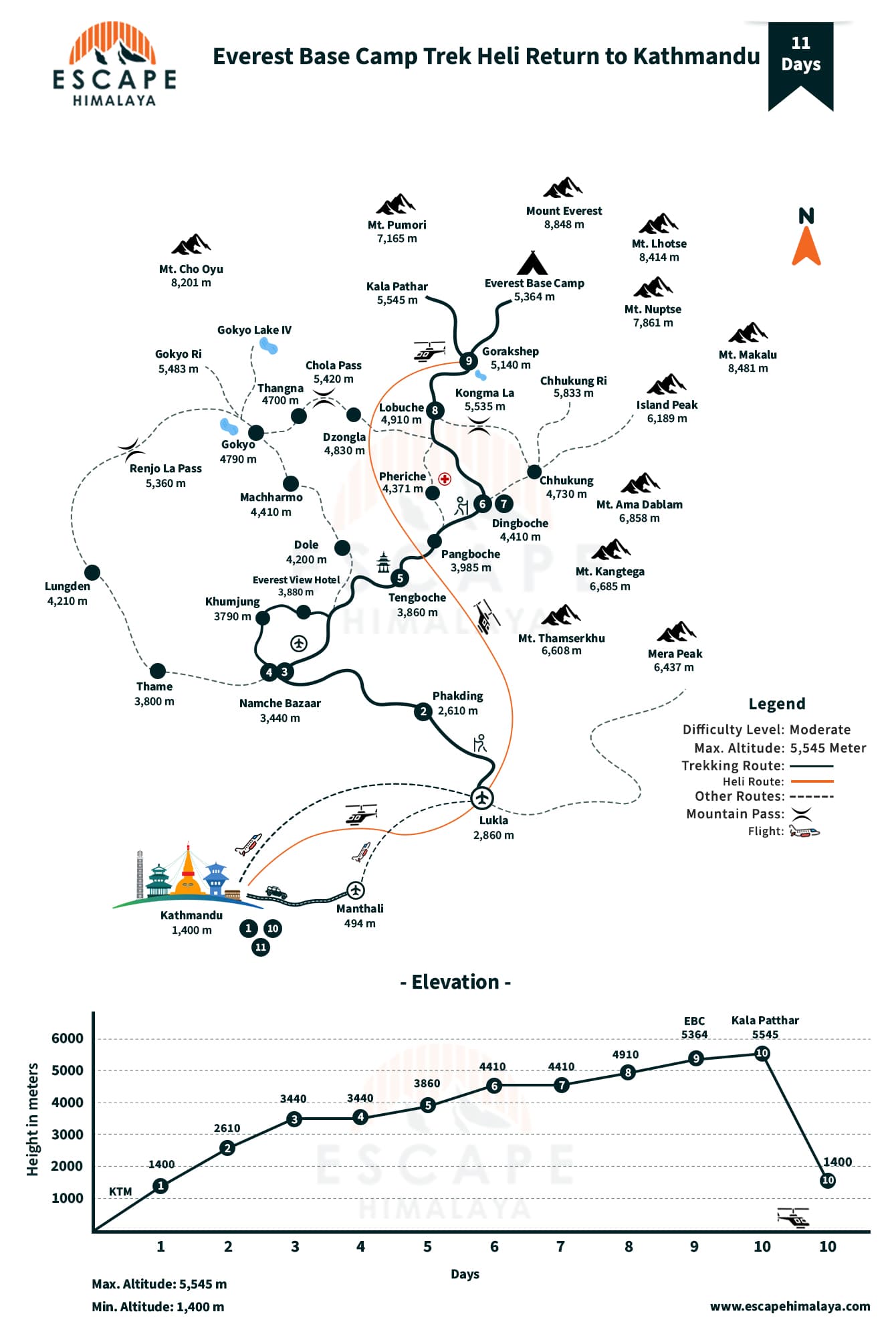
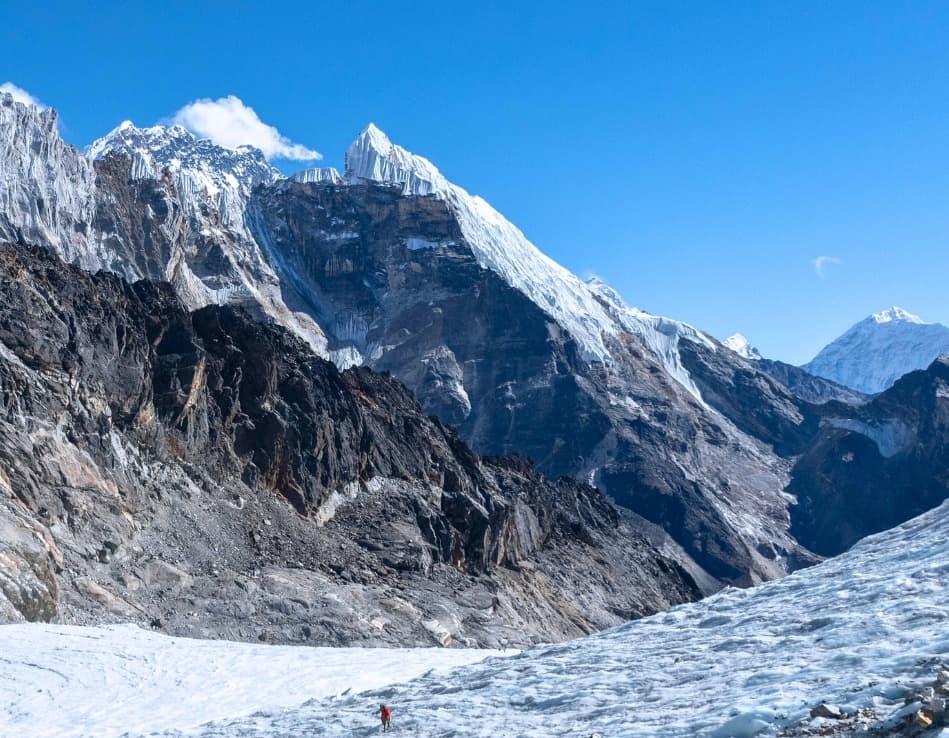
The Everest Base Camp Heli Return Trek follows the complete classic Khumbu trail on foot from Lukla to Gorakshep, covering every major stop on the route that Hillary and Tenzing walked in 1953. The trail runs north from Lukla along the Dudh Koshi River valley through Phakding, climbs steeply to Namche Bazaar, continues through rhododendron and juniper forest to Tengboche, crosses into the high-altitude zone at Dingboche, and follows the lateral moraine of the Khumbu Glacier to Lobuche and Gorakshep.
The journey begins in Kathmandu. On Day 1, an Escape Himalaya representative meets arriving trekkers at Tribhuvan International Airport and transfers them to a 3-star hotel in Thamel, the central tourist district. The pre-departure briefing covers the full itinerary; gear is distributed, including the duffel bag, down jacket, and sleeping bag; permits are confirmed; and the guide is introduced. This is the last night in a proper hotel bed for 10 days, so most trekkers spend the evening eating well and resting rather than exploring.
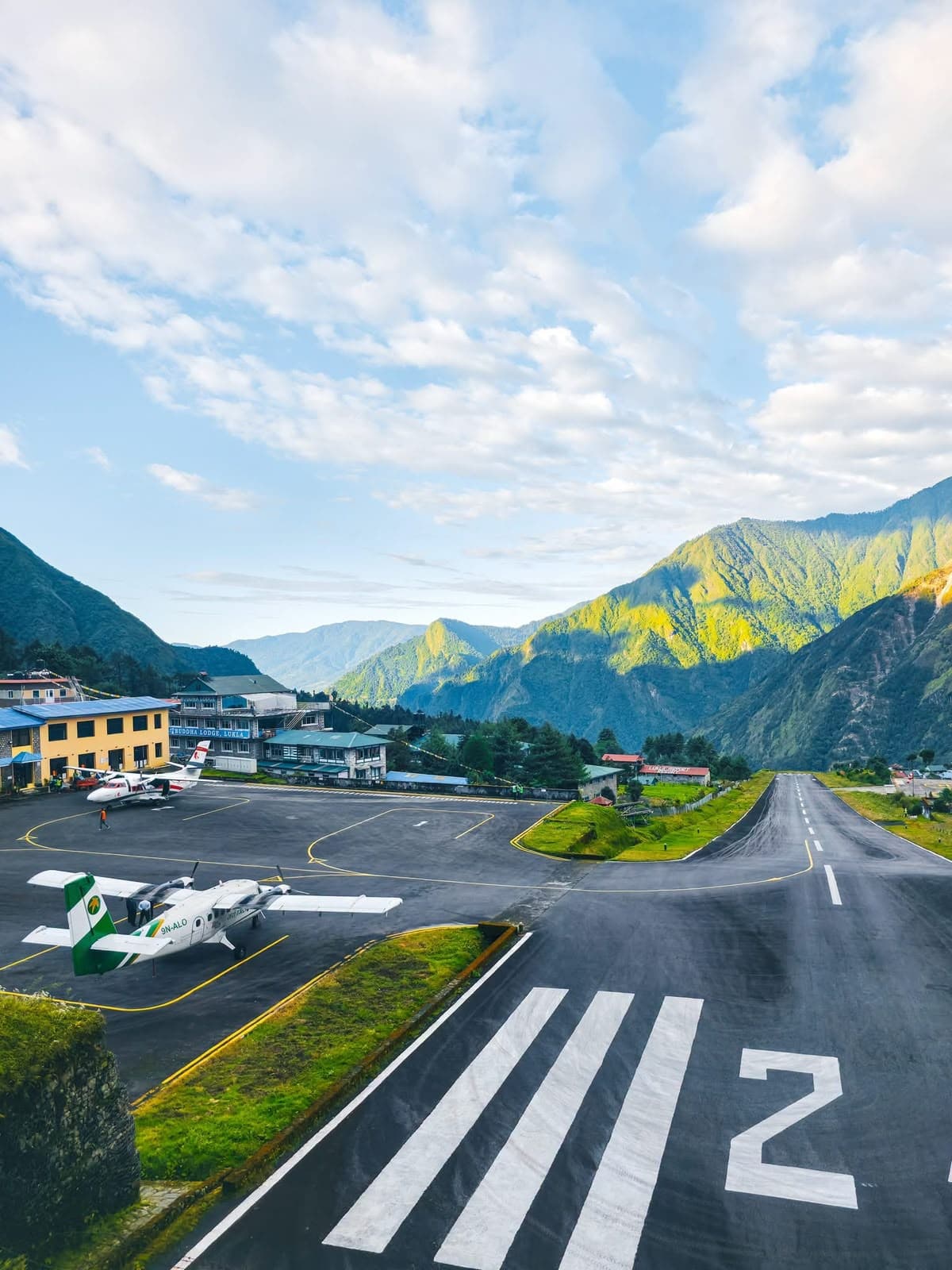
Day 2 starts with the flight to Lukla. During peak seasons from mid-March to mid-May and late September to late November, flights operate from Manthali Airport in Ramechhap, about 132 kilometers from Kathmandu, and a vehicle must depart from the hotel between 1 am and 2 am. Outside peak season, flights run directly from Kathmandu in 30 to 40 minutes. Landing at Tenzing Hillary Airport is one of those moments that sets the tone for the entire trek. The runway is 527 meters long with a 12 percent upward gradient and a cliff edge at the downhill end. The plane commits fully to the landing, and there is no going around. From Lukla at 2,860 meters, the trail follows the Dudh Koshi River downhill through Chaurikharka before the path flattens along the riverbank toward Phakding at 2,652 meters. This first day covers 8 kilometers over 3 hours, crossing several suspension bridges along the way, and serves mainly as an easy introduction to walking on the Khumbu trail.
The climb from Phakding to Namche Bazaar on Day 3 is the first real test of the trek. The trail enters Sagarmatha National Park at the Monjo checkpoint, where permits are verified, and then follows the river through increasingly steep ground before a 600-meter climb to Namche at 3,440 meters. This section covers 10 to 12 kilometers over 6 hours. Just below the final approach to Namche, the trail crosses a high suspension bridge, and Hillary's View Point appears on the ridge above, where Everest shows its pyramid summit above the surrounding peaks for the first time on the route.
Namche Bazaar is the Sherpa capital of the Khumbu and the most developed settlement on the entire trail. Two nights are spent here, with the second day used for a day hike to Everest View Hotel at 3,880 meters. The hotel was built in 1971 with a Guinness World Record as the highest-placed hotel in the world, and the terrace view covers Everest, Ama Dablam, Lhotse, Nuptse, Thamserku, and Kongde Ri on a clear morning. After the hike, the afternoon is free for Namche itself: the Sherpa culture museum covering the 1953 expedition, the Edmund Hillary School and Hospital in nearby Khumjung, the Khumjung Monastery, bakeries, and the Saturday market where Tibetan traders and local Sherpa sellers meet.
The trail from Namche to Tengboche on Day 5 drops into the Dudh Koshi valley at Phunki Tenga before climbing through dense rhododendron and juniper forest to the monastery ridge at 3,860 meters. In spring from March through May, this section is in full bloom with red, pink, and white flowers covering the slopes. Tengboche Monastery, founded in 1916 and rebuilt after a fire in 1989, sits at the top of the ridge with a direct line of sight to Ama Dablam and the Everest massif. Morning prayers begin around 6 am and evening prayers around 6 pm, both open to trekkers who sit quietly at the back. The walk covers 10 to 11 kilometers over 5 hours.
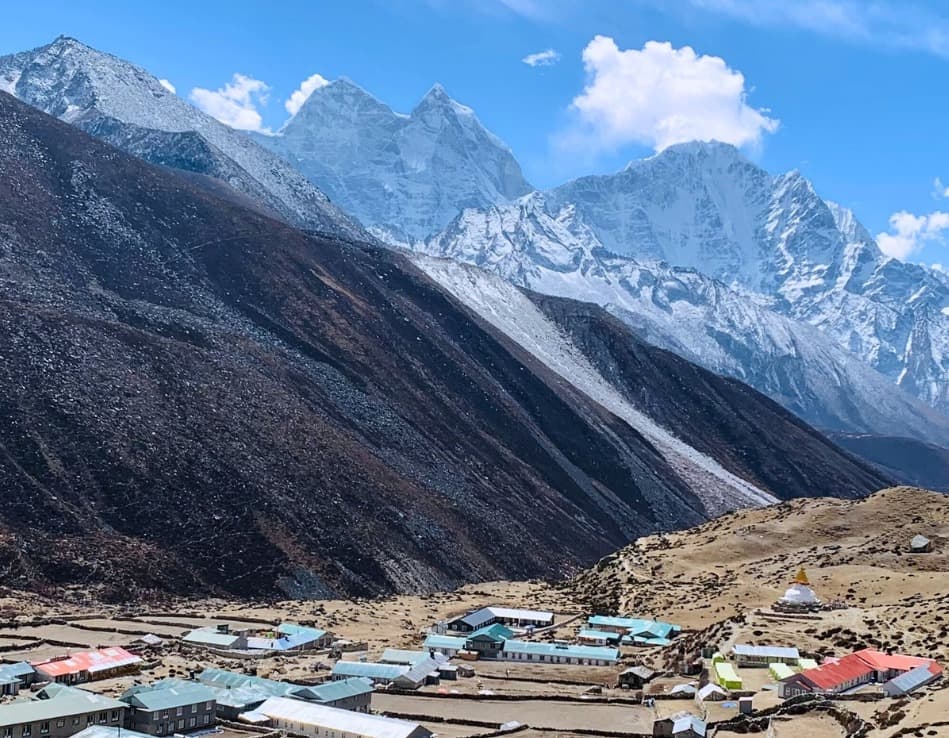
Day 6 continues from Tengboche to Dingboche at 4,410 meters. The trail passes through Pangboche at 3,900 meters, one of the highest permanently inhabited villages in the world, and its ancient monastery. From Pangboche, the path crosses the Imja Khola on a suspension bridge before the landscape opens into the wide bowl of Dingboche, known locally as the Summer Valley. Lhotse, Ama Dablam, Island Peak, and the peaks of the upper Khumbu are visible across the valley on clear afternoons. This day covers 11 to 12 kilometers over 5 to 6 hours.
The rest day at Dingboche on Day 7 involves a hike to Nagarjun Hill at 5,100 meters, covering 5 to 6 kilometers round trip over 4 to 5 hours. The views from the summit include Makalu at 8,463 meters, the world's fifth-highest mountain, along with Lobuche East at 6,119 meters, Lobuche West at 6,145 meters, Kangtega at 6,685 meters, Taboche at 6,367 meters, and Ama Dablam at 6,856 meters. This hike follows the principle of gaining altitude during the day and returning to sleep lower, which is the most practical way to help the body adjust before the push toward Lobuche and Gorakshep.
Day 8 covers the walk from Dingboche to Lobuche at 4,910 meters, a distance of 10 to 11 kilometers over 5 to 6 hours. The trail passes through Thukla at 4,620 meters, where a steep climb to the Thukla Pass reveals a field of stone cairns and memorial chortens built in honor of climbers who have died on Everest. The 1996 disaster is represented here, with memorials to Scott Fischer, Rob Hall, and other members of the expeditions that were caught in the storm. Many trekkers pause here for a long time. Above the pass, the path follows the lateral moraine of the Khumbu Glacier to Lobuche, where the views of Nuptse's south face and the Khumbu icefall begin to dominate the northern skyline.
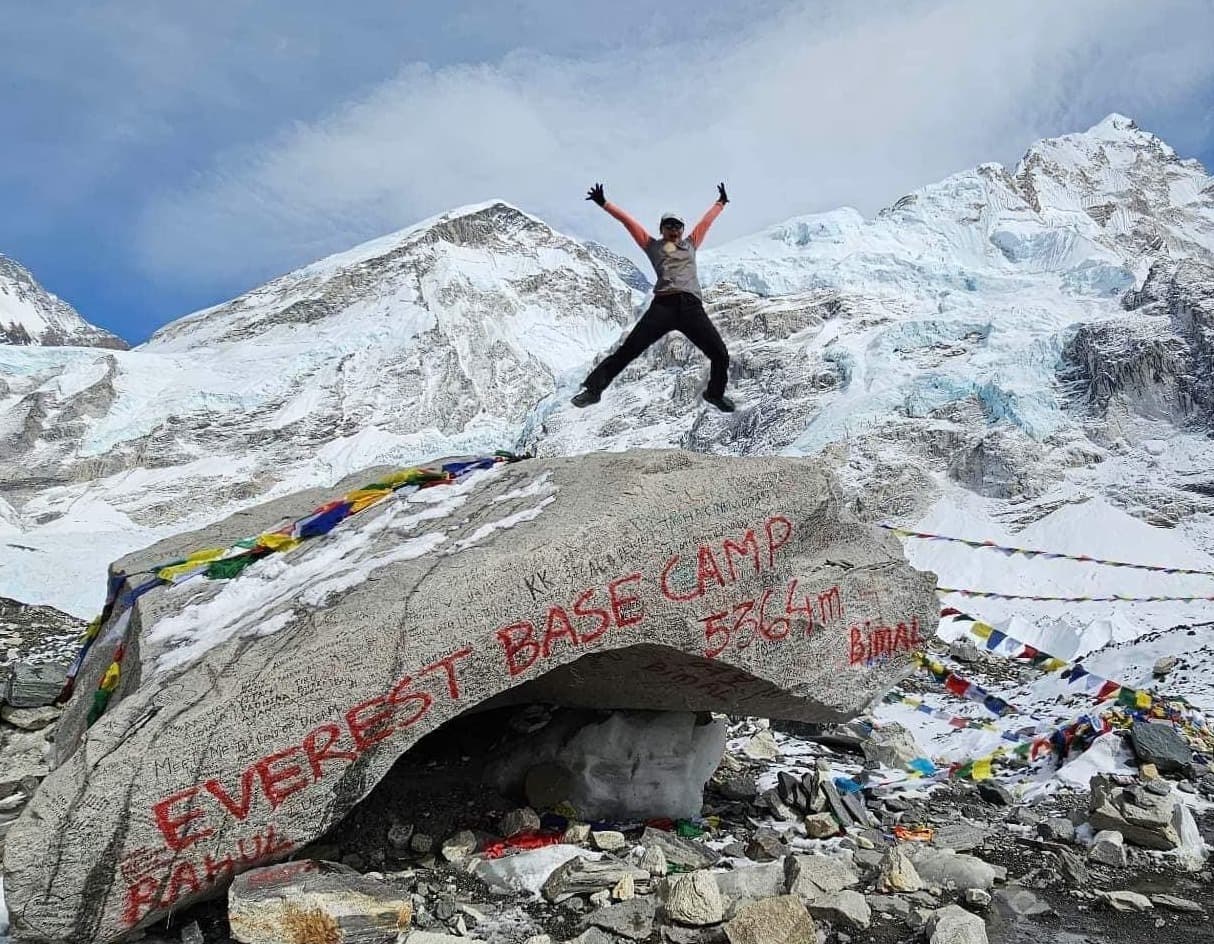
Day 9 is the longest and most demanding day on the entire route, covering 14 to 15 kilometers over 8 hours from Lobuche to Gorakshep, then to Everest Base Camp and back to Gorakshep for the night. The walk from Lobuche to Gorakshep at 5,181 meters follows the edge of the Khumbu Glacier. Gorakshep is a small cluster of teahouses at the edge of a dried glacial lake and serves as the base for both Base Camp and Kala Patthar. From Gorakshep, the trail to Everest Base Camp at 5,364 meters crosses glacial moraine and rock debris alongside the glacier. During climbing season in April and May, the expedition tents of teams preparing for Everest are pitched on the ice above. The Khumbu Icefall sits directly above Base Camp, its towers of ice and crevasses visible from the valley floor where trekkers stand.
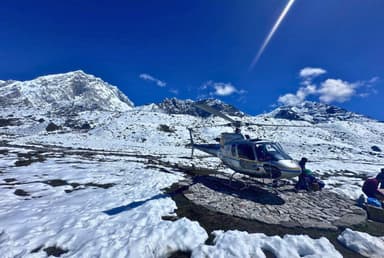
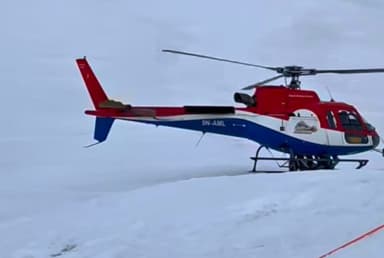
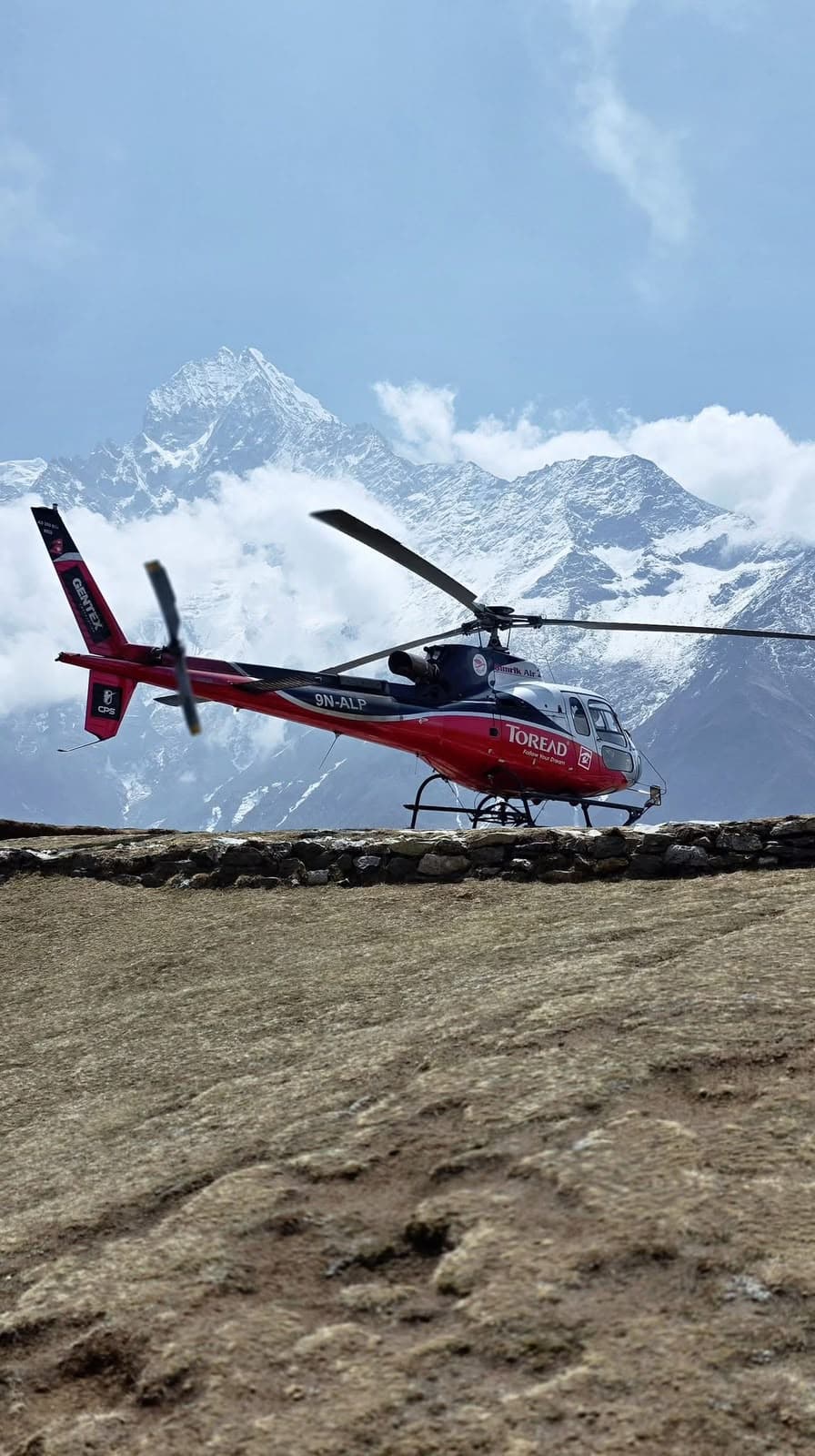
The final trekking day, Day 10, starts at 4 am. The pre-dawn walk from Gorakshep to Kala Patthar at 5,545 meters takes about 2 hours in the dark and cold. At the top, the sky begins to shift from black to deep blue to orange, and the peaks catch the light in sequence from east to west over roughly 20 minutes. Everest's south face is directly ahead, Lhotse rises to the right, Nuptse to the left, and Pumori stands above Gorakshep behind. After returning to Gorakshep for breakfast, the helicopter departs for Kathmandu. The full flight takes approximately 45 minutes, passing directly over the Khumbu Glacier, the icefall, and the upper mountain terrain before the altitude drops and the Kathmandu Valley appears below. Trekkers land back in Kathmandu the same day they stood on Kala Patthar.
Why Choose Escape Himalaya for Everest Base Camp Heli Trek?
Guides Who Actually Know These Mountains
All our guides have government licenses and have been to Everest Base Camp many times. Most started as porters back in the 90s and worked their way up. They know which teahouse has the best dal bhat, where the weather changes first, and exactly where helicopters can land if something goes wrong.
Helicopter Companies We Trust
We only use Manang Air and Simrik Air - the two best helicopter companies in Nepal for mountain flying. Their pilots have thousands of hours flying in the Himalayas, and their helicopters are properly maintained. These aren't budget operators cutting corners on safety.
Real Emergency Backup
Every group carries satellite phones, oxygen, and proper first aid gear. Our guides get trained every year on high-altitude medicine and know how to prepare helicopter landing spots. We have direct contact with hospitals in Kathmandu 24/7 - not just some emergency number that might work.
No Surprise Costs
The price we tell you includes everything important - permits, food, rooms, flights, helicopter, guides, porters, safety gear. You won't get hit with extra charges for fuel or helicopter weight limits or permit fee increases after you've already paid.
Teahouses We Know and Trust
After 30 years of organizing trekking tours, we know which teahouses are clean, which ones have good food, and which owners treat trekkers well. We don't just book the cheapest places - we book places where you'll actually want to sleep and eat.
Small Groups Only
Maximum 10 people per group, usually smaller. Solo trekkers are always welcome with guaranteed departures. Small groups mean your guide knows your name, can adjust pace for the group, and you actually get to talk with local people instead of overwhelming them.
Emergency Evacuation That Works
We've mapped helicopter landing zones all along the route, have direct relationships with rescue companies, and carry $100,000 evacuation insurance. This isn't theoretical - we've actually evacuated people during bad weather and medical emergencies.
Nepali Company, International Standards
We're all a team of Nepalese, so your money goes back to local communities. But we don't compromise on safety or service. Local knowledge plus international standards means you get authentic experiences that actually work properly.
Alternative Treks to Everest Base Camp Heli Trek
Everest Base Camp Heli Return Trek (12 Days)
Same helicopter return, but you stay one extra night in Lukla, then take the regular flight to Kathmandu the next morning. Gives you buffer time if the helicopter gets delayed by weather. Works better if you have tight international flight connections.
Everest Base Camp Trek (14 Days)
Classic route where you walk both ways. Same trails to base camp, but you walk back down through every village you already visited. Takes 14 days total. More time in villages, extra acclimatization, and you get the satisfaction of doing the whole thing on foot. Choose this if you have enough vacation time and like the traditional approach.
Everest Base Camp Trek with Gokyo Lakes and Cho La Pass (17 Days)
This pristine, serene, and untouched route adds the beautiful Gokyo Lakes with their crazy turquoise color. You cross Cho La Pass (5,420m), which is pretty technical, and climb both Kala Patthar and Gokyo Ri for different views of Everest. Less crowded, more wilderness, longer trip, but you see way more of the Khumbu region.
Experience Nepal's mountains with Escape Himalaya - we've been doing this for 30 years and know these mountains better than anyone. Contact us today to start planning your Everest Base Camp adventure.